
Wall-Mounted or Free-Standing: Which Frame Type?
This decision is usually made by the wall, not by preference. What your elevation is built from, and where your patio actually sits, determines which frame type is sensible.
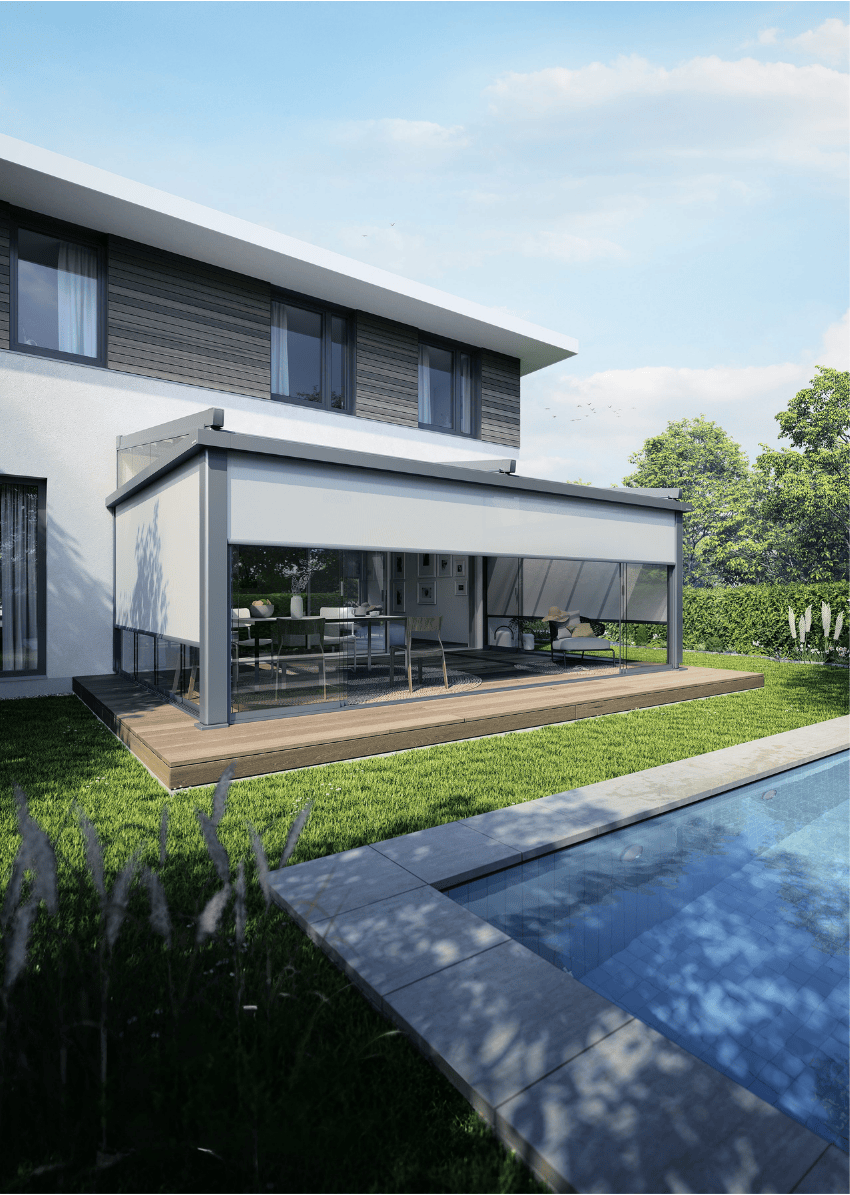
When wall-mounting works
Sound masonry, a clear run above door height, and a patio that starts at the house. Two fewer posts means a more open feel.
When free-standing is better
Timber-framed or heavily insulated walls, rendered substrates of unknown quality, low eaves, or a patio positioned away from the house.
Boundaries and neighbours
Free-standing structures near boundaries need thought about overhang, gutter discharge and access for maintenance.
Effect on the house
Wall-mounting shades the room behind slightly more. Free-standing keeps daylight to the house and creates a separate destination in the garden.
Frequently asked questions
Is free-standing less stable?
No, it is engineered for its own loads and often uses larger bases.
Can it be fixed to a rendered wall?
Often, once we know what is behind the render. That is checked at survey.
Does it need to touch the house at all?
No. Leaving a gap can simplify drainage and avoid a difficult flashing detail.
Which is cheaper?
Usually wall-mounted, because of fewer posts and bases, unless wall preparation is complex.
Next step
Send photos of your wall and patio and we'll tell you which suits.
Ready to Transform Your Outdoor Space?
Get a free, no-obligation quote. Email a photo of the area plus your preferred width, projection and operation type, and we'll do the rest.