
Lighting and Heating: Making the Space Usable After Dark
The difference between a structure used from May to September and one used all year is almost always lighting and heat. Both are far easier to integrate at manufacture than to add afterwards.
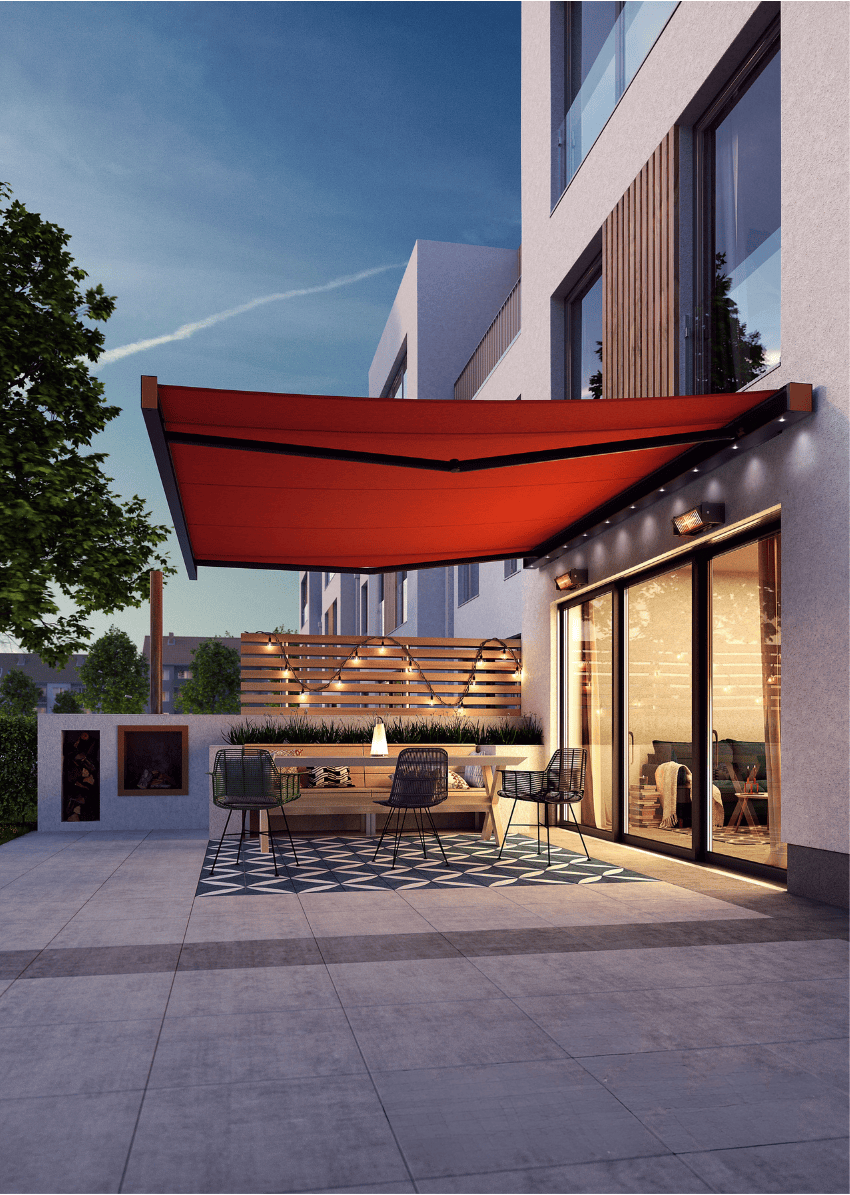
Integrated LED
Lighting sits inside the beams or rafters, so there are no visible fittings or trailing cable. Dimming is worth specifying, full brightness is rarely what you want at 9pm.
Infrared heating
Infrared warms people and surfaces rather than the air, which is why it works in an open structure where convection heaters do not.
Cabling and supply
Power routes inside posts to a spur. Agreeing the supply point and switch position at survey avoids surface trunking later.
Controls
Remote or wall control for both, with zoning where the structure is large enough to want light at one end and heat at the other.
Frequently asked questions
Can I add heaters later?
Yes, if cabling and mounting points are provided now. Retro-fitting without them means visible cable.
Are heaters expensive to run?
They are used in bursts rather than continuously; running cost depends on your tariff and how long you sit out.
Is the wiring certified?
Electrical work is carried out to current regulations by a qualified electrician.
Do LEDs attract insects?
Warmer colour temperatures tend to attract fewer than cold white.
Next step
Ask for lighting and heating to be priced as options on your quote.
Ready to Transform Your Outdoor Space?
Get a free, no-obligation quote. Email a photo of the area plus your preferred width, projection and operation type, and we'll do the rest.