
Glass Room Costs: Enclosure Is the Expensive Half
A glass room starts as a veranda and becomes a room once you glaze the sides. Almost all of the extra cost sits in that enclosure, the sliding walls, the tracks they run in and the details that stop condensation and draughts.
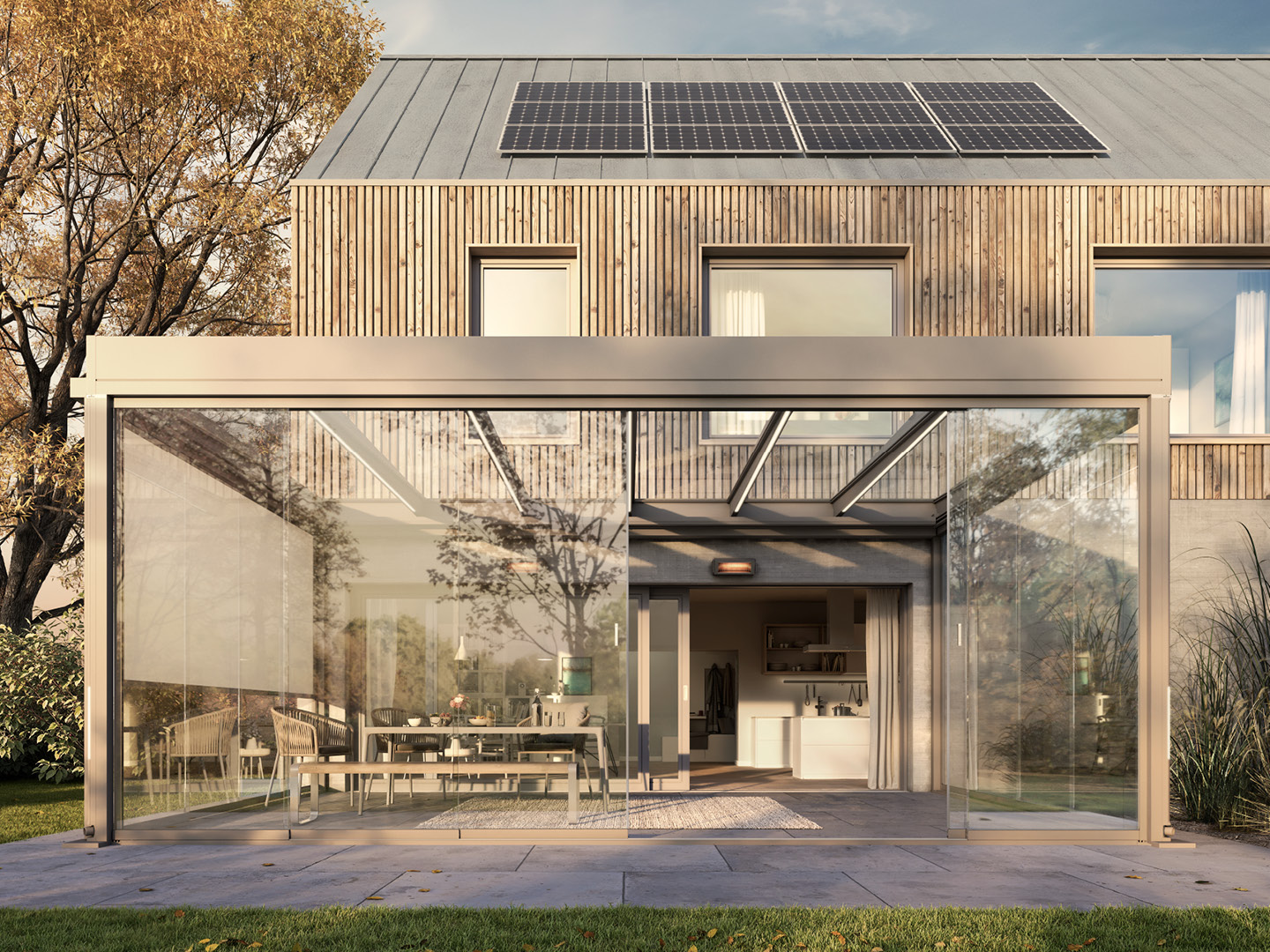
Sliding glass walls
Frameless sliding panels are priced by the number of panels and the track configuration. More panels means more stacking space, more track and more hardware.
Thresholds and levels
Getting a low, clean threshold that still drains is detail work. Where patio levels are wrong, they get corrected before the glazing goes in.
Ventilation and shading
A sealed glass box gets warm. Opening panels, roof shading, blinds or a ventilated ridge are part of a serious specification rather than an afterthought.
Finishing
Floor finish, lighting, heating and power sockets convert the structure into a room you use in February as well as June.
Frequently asked questions
Is a glass room the same as a conservatory?
No. It is a lighter, largely frameless structure that stays closer to an outdoor space, with far less internal frame than a conservatory.
Will it be usable in winter?
With shading, ventilation and infrared heating, most owners use theirs across the year. It is not a heated extension unless you specify it as one.
Do the glass walls seal fully?
Sliding glass systems are weather-resistant rather than hermetic. Brush seals limit draughts and drive rain, which is what an outdoor room needs.
Can I glaze a veranda I already have?
Sometimes, if the frame and posts were specified for it. We check the existing structure at survey before recommending it.
Next step
Book a survey and we'll price the veranda and the enclosure as separate stages.
Ready to Transform Your Outdoor Space?
Get a free, no-obligation quote. Email a photo of the area plus your preferred width, projection and operation type, and we'll do the rest.