
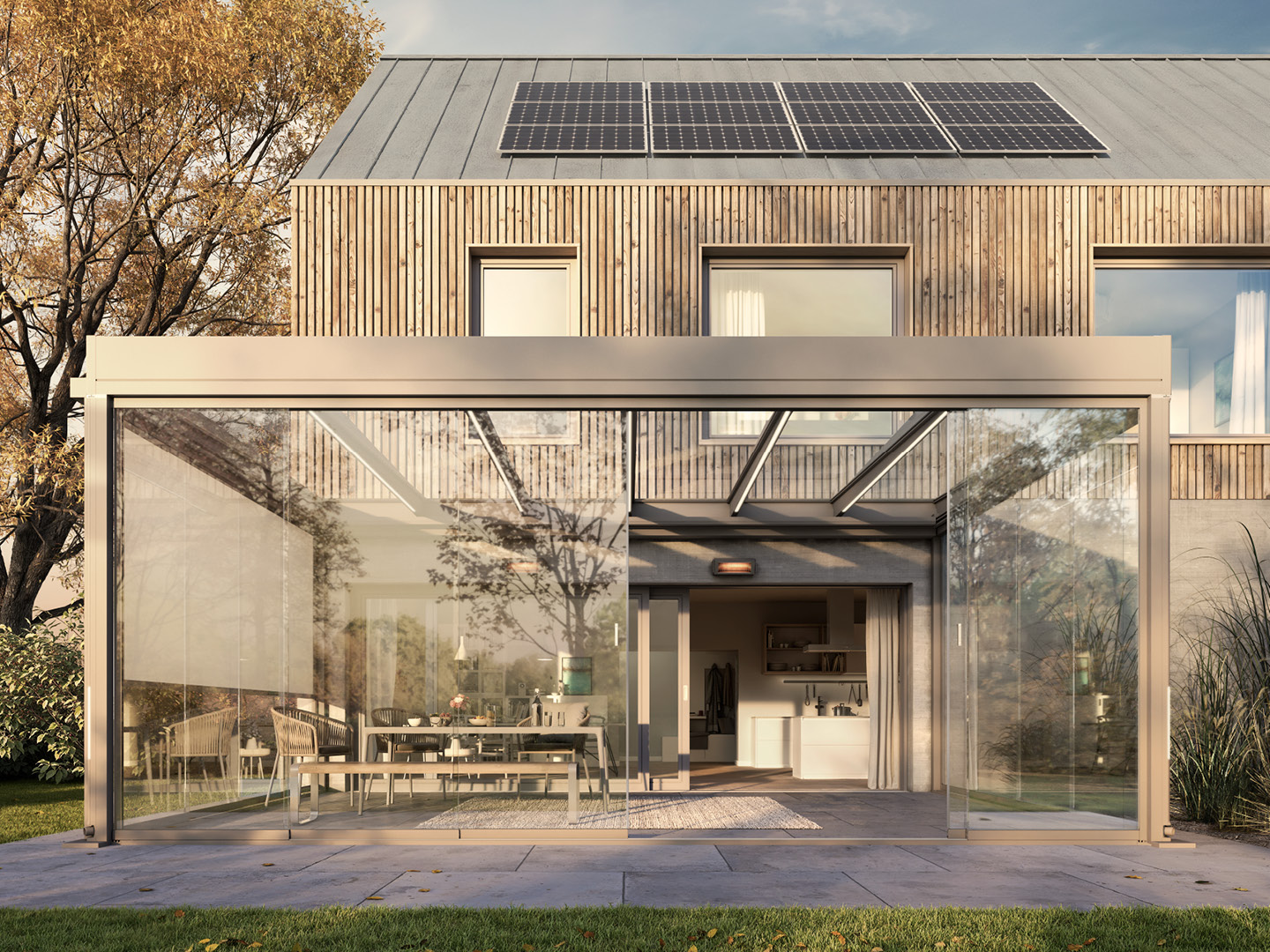
Sliding Glass Roofs for an Open-Air Option
A sliding glass roof lets part or all of the roof glazing move back on tracks, turning a fully enclosed veranda into an open-air space on demand. It's a more involved specification than a fixed roof, so it's worth understanding how the mechanism actually behaves before deciding it's right for your garden.
How the panels move
Sliding roof panels run on aluminium tracks integrated into the frame, typically stacking one section behind or above another as they're opened. The number of panels and the direction they travel depend on the roof's overall length and the structure supporting it.
Sealing when closed
The trade-off for a moving roof is the seal at each track and panel junction, which has to be engineered carefully to stay weathertight when closed. A well-specified sliding roof shouldn't leak more than a fixed one, but it relies on regularly maintained seals to keep performing that way.
Manual versus motorised operation
Smaller sliding sections can sometimes be operated by hand, but most sliding glass roofs over a reasonable span are motorised, controlled by a wall switch or remote, similar to how a retractable awning is operated.
Weather limits on opening
Like any opening roof, a sliding glass system is usually left closed in rain, high wind or snow, and its main benefit comes on calm, warm days when opening the roof genuinely changes how the space feels.
- Close the roof in forecast rain or high wind
- Keep tracks clear of leaves and debris
- Check seals periodically for wear
Comparing to a fixed roof with vents
A fixed glass roof with opening vents gives some ventilation without the cost and complexity of full sliding panels, and suits customers who want airflow more than the option of a fully open sky. Sliding roofs are the choice when a genuinely open-air feel matters more than convenience.
Common questions
Do sliding glass roofs need more maintenance than fixed ones?
Yes, the tracks and seals benefit from periodic checking and cleaning in addition to the general glass maintenance any roof needs, since debris in the tracks can affect smooth operation.
Can a sliding roof be left partly open?
Most systems allow intermediate positions, though leaving it part-open in unpredictable weather isn't usually advised given the exposed seal at the gap.
Is a sliding glass roof much more expensive than a fixed one?
Yes, the tracks, motorisation and additional engineering add cost compared with a fixed roof of the same area, reflecting the extra components involved.
What happens to a sliding roof in strong wind?
It's designed to be closed and locked in strong wind, similar to how a retractable fabric awning would be retracted, rather than left open.
In short
Sliding glass roof panels give a genuinely open-air option on calm days, at the cost of extra tracks, seals and maintenance compared with a simpler fixed glass roof.
What to do next
Find out whether a sliding glass roof suits your veranda before committing to a fixed design.
Ready to Transform Your Outdoor Space?
Get a free, no-obligation quote. Email a photo of the area plus your preferred width, projection and operation type, and we'll do the rest.