
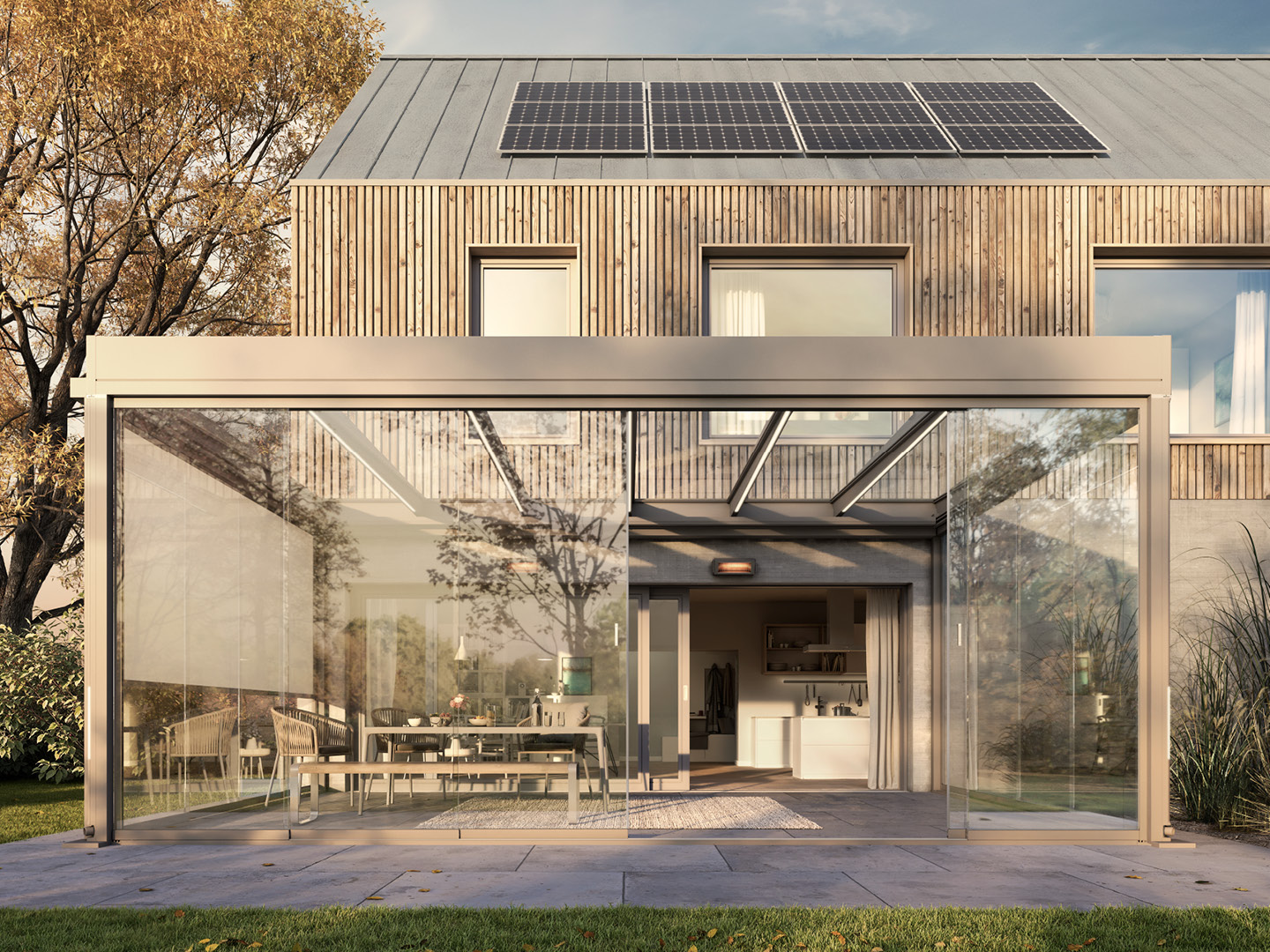
Ventilating a Veranda Roof to Manage Heat
Glazing choice alone can only do so much against a hot, still afternoon under a glass roof, moving air out of the space matters just as much. A few different ventilation approaches turn up on veranda and glass room roofs, each suited to slightly different situations.
Safety first: isolate power before touching a motorised system, and never work at height off a ladder alone. If in doubt, book a fitter rather than forcing a mechanism.
Ridge and eaves ventilation
A gap built into the ridge or eaves of the roof allows warm air, which naturally rises, to escape rather than being trapped under the glazing. This passive approach needs no power or moving parts, though it offers less control than an opening vent.
Opening roof vents
Some glass and solid roofs include a dedicated opening vent panel, manually or electrically operated, which can be opened on hot days to release built-up heat and closed again in poor weather, giving more active control than a fixed gap.
Side glazing and cross-ventilation
Where side glazing or bi-fold doors are part of the structure, opening them alongside a roof vent creates a through-draught that clears trapped heat far more effectively than a roof vent working alone.
- 1Open lower-level glazing alongside any roof vent
- 2Position vents to catch prevailing wind where possible
- 3Avoid relying on tint alone without any airflow
Ventilation on solid roofs
A solid insulated roof holds heat out more effectively in summer than glass, reducing how much ventilation is needed for temperature control, though it still benefits from some airflow if the space is fully enclosed with limited window opening.
Questions we get asked on repair calls
Can ventilation be added to an existing sealed roof?
It's more involved than specifying it from the outset, since it usually needs a panel replaced or a vent cut into the frame, so it's worth deciding upfront if overheating is a concern.
Is a roof vent enough on its own to stop overheating?
On very hot days a vent alone may not be enough; combining it with side ventilation and some shading gives a more reliable result.
Do motorised vents need much maintenance?
They benefit from an occasional check of the seal and mechanism, similar to any motorised opening component on the structure.
Does ventilation help with condensation as well as heat?
Yes, allowing air to circulate can reduce condensation build-up on the underside of glazing, particularly during cooler, damp conditions.
Combining with shading
Ventilation and shading solve slightly different problems, shading reduces how much heat gets in, ventilation moves out the heat that does. A well-planned roof usually addresses both rather than relying on one alone during a hot spell.
In short
Ridge gaps, opening vents and cross-ventilation with side glazing all help clear heat that builds up under a veranda roof, working best alongside shading rather than instead of it.
Get it looked at
Ask about ventilation options when specifying a glass or solid veranda roof.
Ready to Transform Your Outdoor Space?
Get a free, no-obligation quote. Email a photo of the area plus your preferred width, projection and operation type, and we'll do the rest.