
Choosing a canopy for outdoor dining
Eating outside is less forgiving than sitting outside. People stay for an hour or more, plates and glasses are on the table, and a single drip onto a meal ends the booking. A canopy for dining therefore has to do more than provide shade. This guide compares the three structures we fit for outdoor dining and lists the details, from headroom to gutters, that separate a canopy diners enjoy from one they avoid.
Planning covered dining?
Send us your table layout or a photo of the space and we will suggest which structure suits it. Call 0114 312 3771 to book a free survey.
Three structures, three kinds of dining
We fit retractable awnings, fixed glass or polycarbonate canopies and louvred pergolas. Each suits a different pattern of outdoor dining, and the right one depends on how many months you want tables outside and how often it rains while they are occupied.
- Retractable awning
- shade for summer lunches, folds away when not needed
- Fixed glass canopy
- dry cover every day, light still comes through
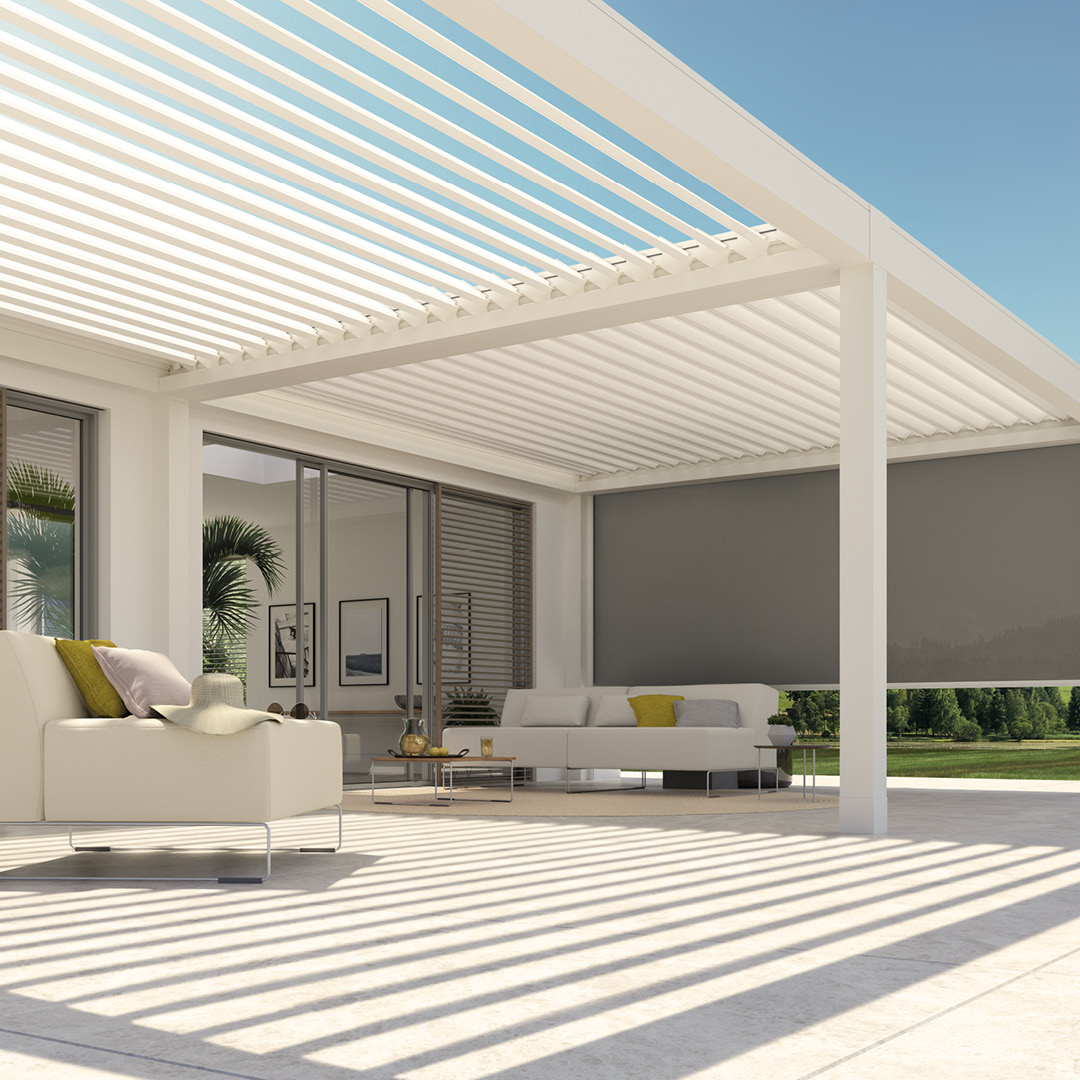
- Louvred pergola
- blades open to the sky or close against rain
Plan the tables before the structure
Draw the table layout first, including chairs pushed back and the route staff walk with trays. Posts should sit on the edges of that layout, not in the middle of it. Headroom matters too: a low front beam feels oppressive over a dining table and blocks the view out. We check falls and levels on survey so the front of the canopy is high enough for comfort while still draining properly.
Water: where it goes decides everything
Diners notice drips and splash far more than anyone standing. A fixed canopy or louvred roof needs integrated guttering and downpipes that carry rainwater away from seating and walkways. Retractable awnings shed water off the front edge, so tables should not sit directly under that line. On louvred roofs, the blades channel water to the frame gutters when closed.
- Integrated gutters sized to the roof area
- Downpipes routed away from seating and doors
- No tables directly under an awning's front edge in rain
- Rain sensor to close louvres or retract an awning automatically
Comfort after dark and out of season
Evening covers are where outdoor dining earns its keep. Integrated LED lighting gives even light over the tables without trailing cables, infrared heaters warm diners directly rather than the air, and zip screens or sliding glass walls block wind on the exposed sides. Plan the power for all of these before the structure is fitted.
Glass walls: when a canopy becomes a room
If the dining area is exposed or you want tables used well outside summer, sliding glass walls turn a fixed canopy into a glass room. The walls stack aside on warm days, so the space still feels outdoors. This is the most enclosed option we fit and it suits terraces that catch wind from one direction.
Choosing between them
Choose an awning if outdoor dining is a summer extra and you want the frontage clear the rest of the year. Choose a fixed glass canopy for dependable cover every day with good light. Choose a louvred pergola if you want open sky on fine days and a closed roof in rain. Our survey covers the wall, the ground, drainage and exposure, and we will recommend the structure that fits how you actually trade or entertain.
Questions people ask us about this
What is the best canopy for outdoor dining in the rain?
A fixed glass canopy or a louvred pergola with the blades closed. A retractable awning handles light showers but is not designed for heavy rain.
Can outdoor dining canopies be heated?
Yes. Infrared heaters can be integrated into the structure, with power planned at the survey stage.
Do you fit dining canopies for homes as well as restaurants?
Yes. We fit verandas, glass rooms, awnings and louvred pergolas for homes and businesses across Yorkshire and north Lincolnshire.
What warranty do the structures carry?
Our structures carry a warranty of up to 10 years, as stated across the site.
In short
Pick the structure by season and rain: awning for summer, fixed glass for daily cover, louvred roof for both; then plan tables, drainage, heat and light.