
Wind, Awnings and Why Sensors Earn Their Keep
Nearly all catastrophic awning damage happens while the owner is out. A wind sensor removes the one variable you cannot control: being there to press the button.
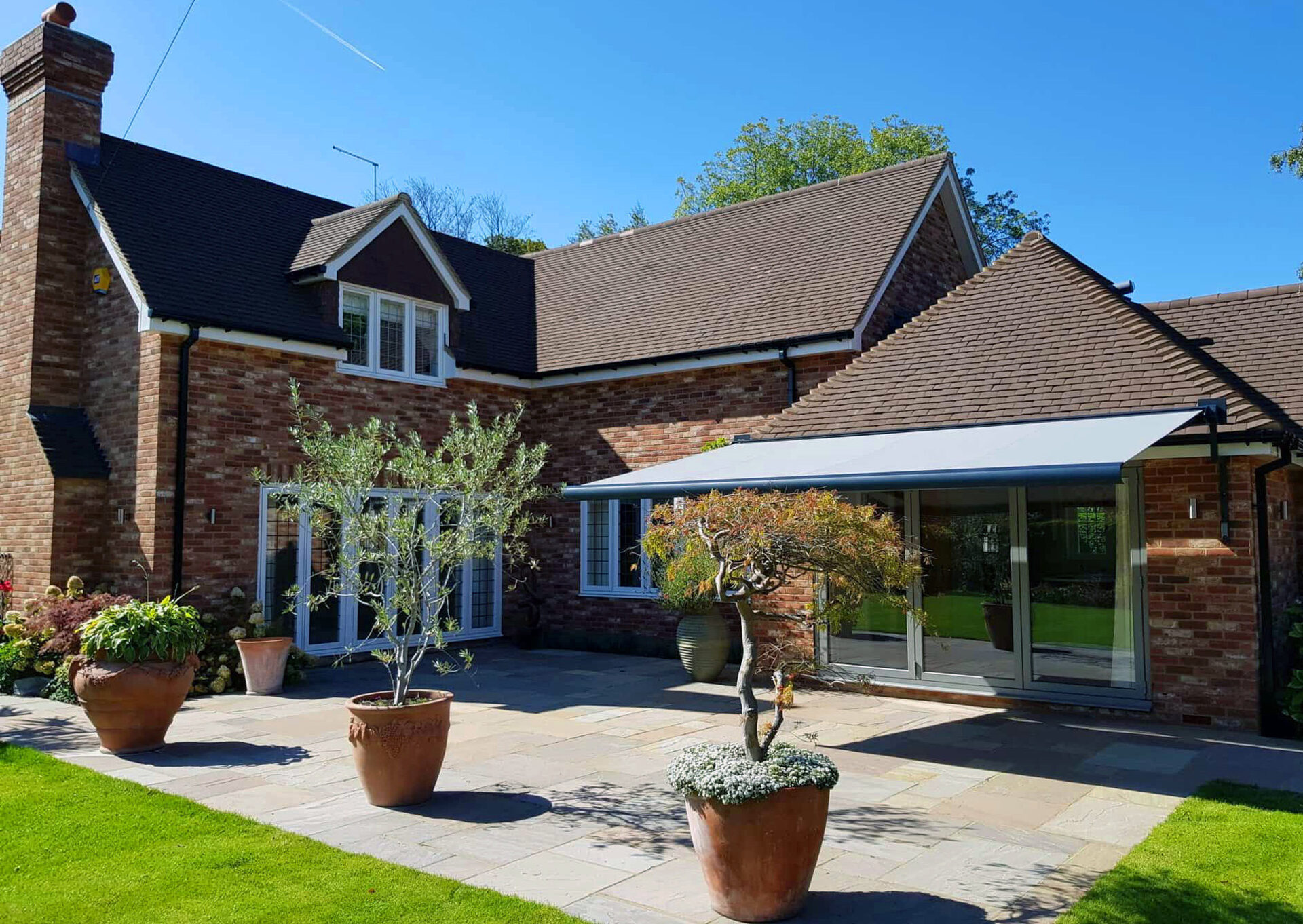
How the damage happens
Wind lifts the fabric, which levers the arms and transfers force into the brackets and wall. Failures usually appear at the fixings, not in the fabric.
Wind classes
Awnings carry a wind resistance classification. It describes safe operating conditions, not survival in a storm, an extended awning should always be retracted before strong wind.
Sensors and automation
A wind sensor retracts automatically above a set threshold. Sun sensors do the opposite, extending in strong sunlight, which is worth pairing with wind for unattended properties.
Siting matters
Corner plots, open fields and elevated gardens see gusting that sheltered terraces never do. That should influence both the system and the sensor decision.
Frequently asked questions
Does the sensor need mains power?
Most are wireless with a battery or solar cell and pair to the motor.
Will it retract while I'm sitting under it?
Yes, above the threshold, which is the point. Thresholds are adjustable.
Do verandas need sensors?
No. Fixed structures are engineered for their location; screens and blinds under them may benefit.
Is wind damage covered by warranty?
Product warranties cover defects, not storm damage to an extended awning, that is an insurance matter.
Next step
Ask about adding a wind sensor to a new or existing awning.
Ready to Transform Your Outdoor Space?
Get a free, no-obligation quote. Email a photo of the area plus your preferred width, projection and operation type, and we'll do the rest.