
Veranda, Glass Room or Conservatory: An Honest Comparison
These three options get lumped together because they all sit at the back of the house and let you use the garden more, but they are genuinely different structures with different strengths. None of them is the automatically correct choice, and the right one depends on how you actually intend to use the space through the year. Here is a fair look at where each one is strongest and where it falls down.
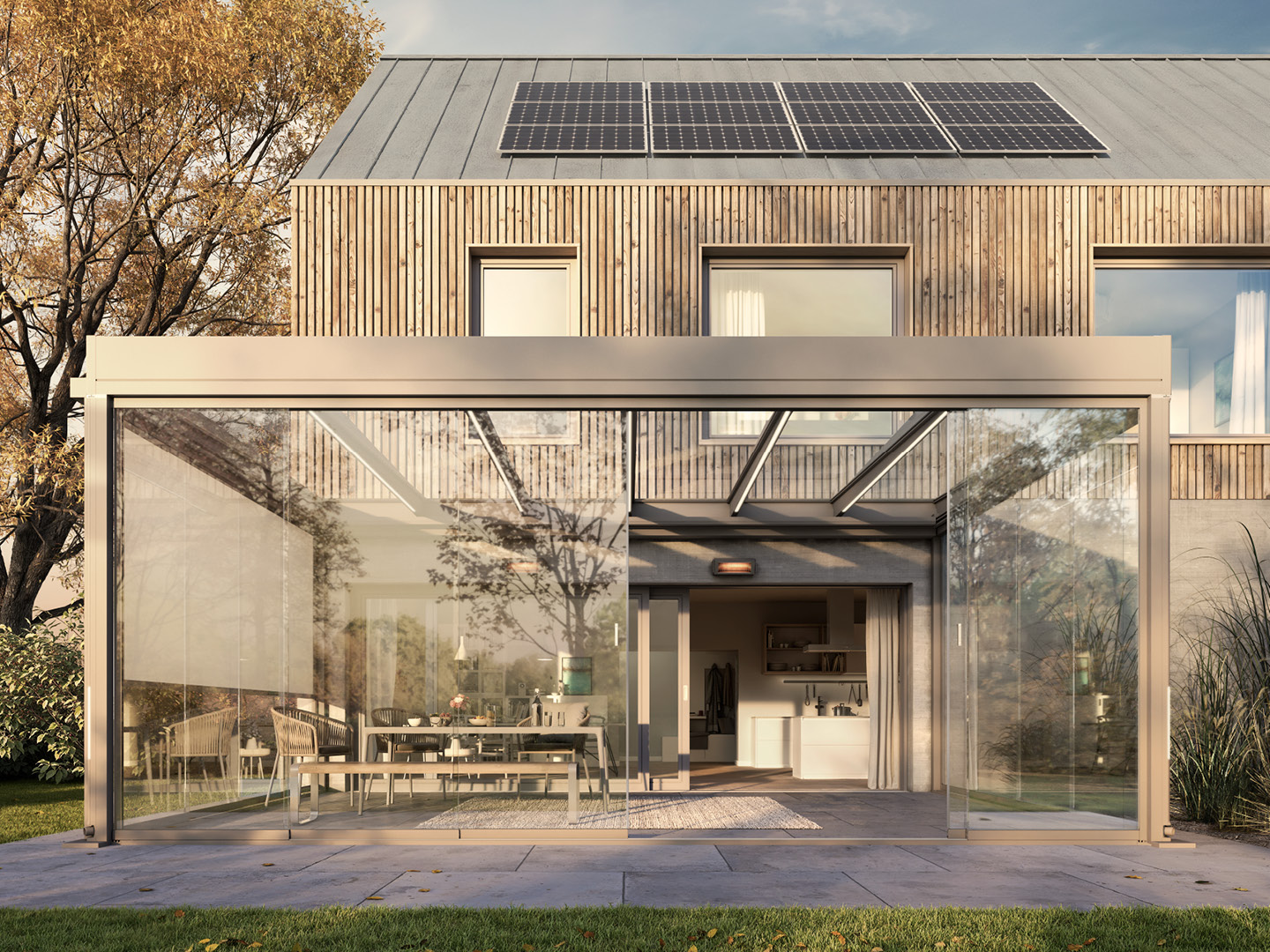
Cost order
As a rule, an open veranda costs less than a glazed veranda turned into a glass room, and both usually cost less than a well-specified conservatory once you account for its foundations, walls and roof construction. This is not a fixed rule for every project, but it reflects how much structure and enclosure each one actually builds. A veranda buys you shelter for the least outlay; a conservatory buys you a proper room.
Heat and glare
A conservatory with a lot of glass can overheat badly in summer sun unless it has serious ventilation, blinds or a solid insulated roof retrofitted to it. A glass room with shading and opening panels manages heat more comfortably because it stays closer to an outdoor structure in its detailing. A veranda avoids the problem largely by not enclosing the space at all, so there is nothing to trap the heat in.
Winter usability
A veranda shelters you from rain and wind but not from cold, so it remains a sheltered outdoor space rather than a warm one in January. A glass room with heating and closed glass walls extends usable months significantly. A well-built, insulated conservatory with proper heating is the option most likely to be comfortable as a genuine room right through winter, which is exactly what it is designed to be.
Planning and building regulations
All three can be affected by permitted development rules, proximity to boundaries, conservation area status and, particularly for enclosed and heated structures, building regulations covering things like glazing, ventilation and thermal performance. The rules differ by structure type and by property, so always confirm your specific situation with your local planning authority or a building control body before committing to a design.
Maintenance
A veranda's upkeep is largely cleaning the roof and checking gutters. A glass room adds sliding glass tracks and seals to keep clean and functioning smoothly. A conservatory, being a fuller building with more roof types, sealant lines and sometimes a more complex roof structure, can have more to maintain over time, though a well-built one is not high-maintenance either.
Effect on the room behind
An open veranda changes very little about the room it is attached to, beyond some shading if the roof is solid. A glass room and a conservatory both sit as a buffer space between the house and the garden, and can reduce light reaching the original room if the glazing or roof is dense, or conversely act as a bright, useful extension if it is well specified. This is worth discussing honestly at survey rather than assuming either way.
Want a professional to handle it?
Frequently asked questions
Is a conservatory actually better than a glass room in some cases?
Yes, plainly. If you want a fully enclosed, heated room used as a dining space or lounge all year round, a well-built conservatory is often the more straightforward answer, because it is designed from the ground up as an insulated room rather than an enclosed outdoor structure.
Which is cheapest to run day to day?
A veranda has no running cost beyond optional lighting or heating you choose to add. A glass room and a conservatory both cost more to heat if used as warm rooms, roughly in proportion to how enclosed and glazed they are.
Can a veranda be converted into a glass room later?
Sometimes, if the original frame and posts were specified with that in mind. It is not guaranteed on every structure, so mention it at the outset if it is a future possibility.
Which needs building regulations approval?
It depends on size, enclosure and whether it is heated, among other factors. Always check your specific project with your local authority or a building control body rather than assuming a category is exempt.
Which lets in the most natural light?
An open veranda with a glazed roof and a glass room with large sliding panels both tend to feel brighter than a conservatory with more solid roof or frame elements, though this varies by design.
Do all three add the same value to a home?
Not necessarily, and it depends heavily on the individual property, local buyer expectations and how well the structure is built and finished, so it is not something we would generalise about.
Next step
Book a free survey and we'll talk you through which of the three genuinely suits how you use your garden.
Ready to Transform Your Outdoor Space?
Get a free, no-obligation quote. Email a photo of the area plus your preferred width, projection and operation type, and we'll do the rest.