
Veranda or Conservatory: Which Suits Your House?
These two products solve different problems. A conservatory adds sealed internal floor area; a veranda shelters the space you already have without darkening the rooms behind it.
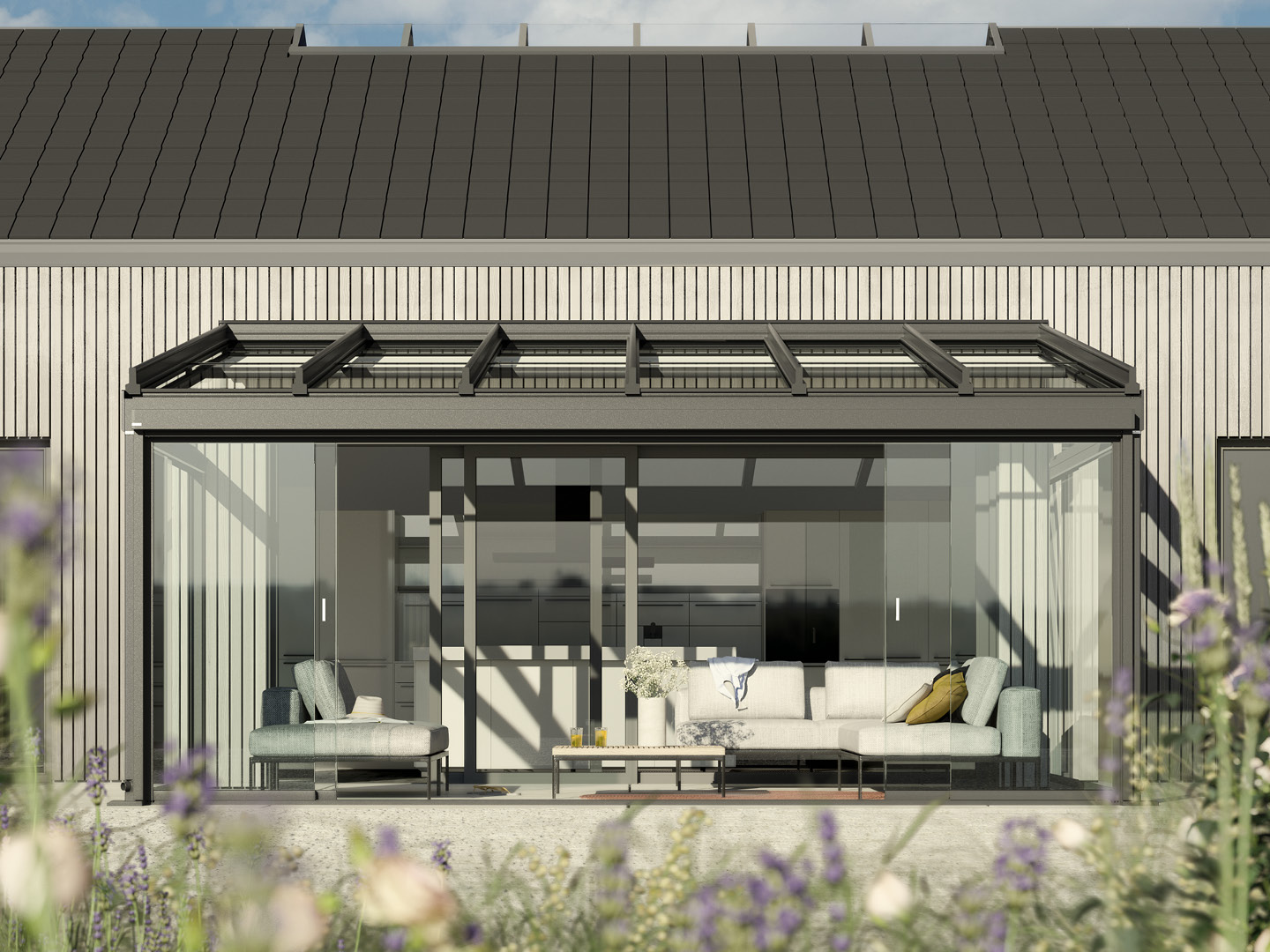
Light into the house
A conservatory often reduces daylight into the room it adjoins, because you are looking through a second glazed envelope. A glass-roofed veranda keeps that route much clearer.
Temperature behaviour
Sealed glazed rooms swing hot and cold and need real thought about ventilation and shading. An open veranda stays close to outdoor temperature, which is easier to manage and less to heat.
Build and disruption
Conservatories usually involve foundations, dwarf walls and internal finishing. Verandas typically need pads and fixings, so the work is shorter and less invasive.
How the space gets used
A conservatory becomes indoor room. A veranda keeps the garden feel and gets used for dining, hot tubs, bikes and shelter over the back door.
Frequently asked questions
Which adds more value?
That depends on the house and the buyer. We would not claim a figure; what we can say is that a veranda costs far less to add and takes up no internal footprint.
Can a veranda be enclosed later?
Yes, if it is specified for it up front, that is essentially our glass room product.
Which needs more maintenance?
Conservatories have more sealed junctions and internal condensation risk. A veranda is mostly glass cleaning and a gutter check.
Does either need planning permission?
Both are usually permitted development within limits, but conservation areas and listed buildings change that. See our planning guide.
Next step
Not sure which route is right? Book a survey and we'll say so plainly.
Ready to Transform Your Outdoor Space?
Get a free, no-obligation quote. Email a photo of the area plus your preferred width, projection and operation type, and we'll do the rest.