
Glass or Polycarbonate Roof: What Changes Day to Day
Polycarbonate lowers the entry price and reduces weight. Glass gives clarity, quieter rain and a surface that cleans properly. Here is how each behaves once it is over your head.
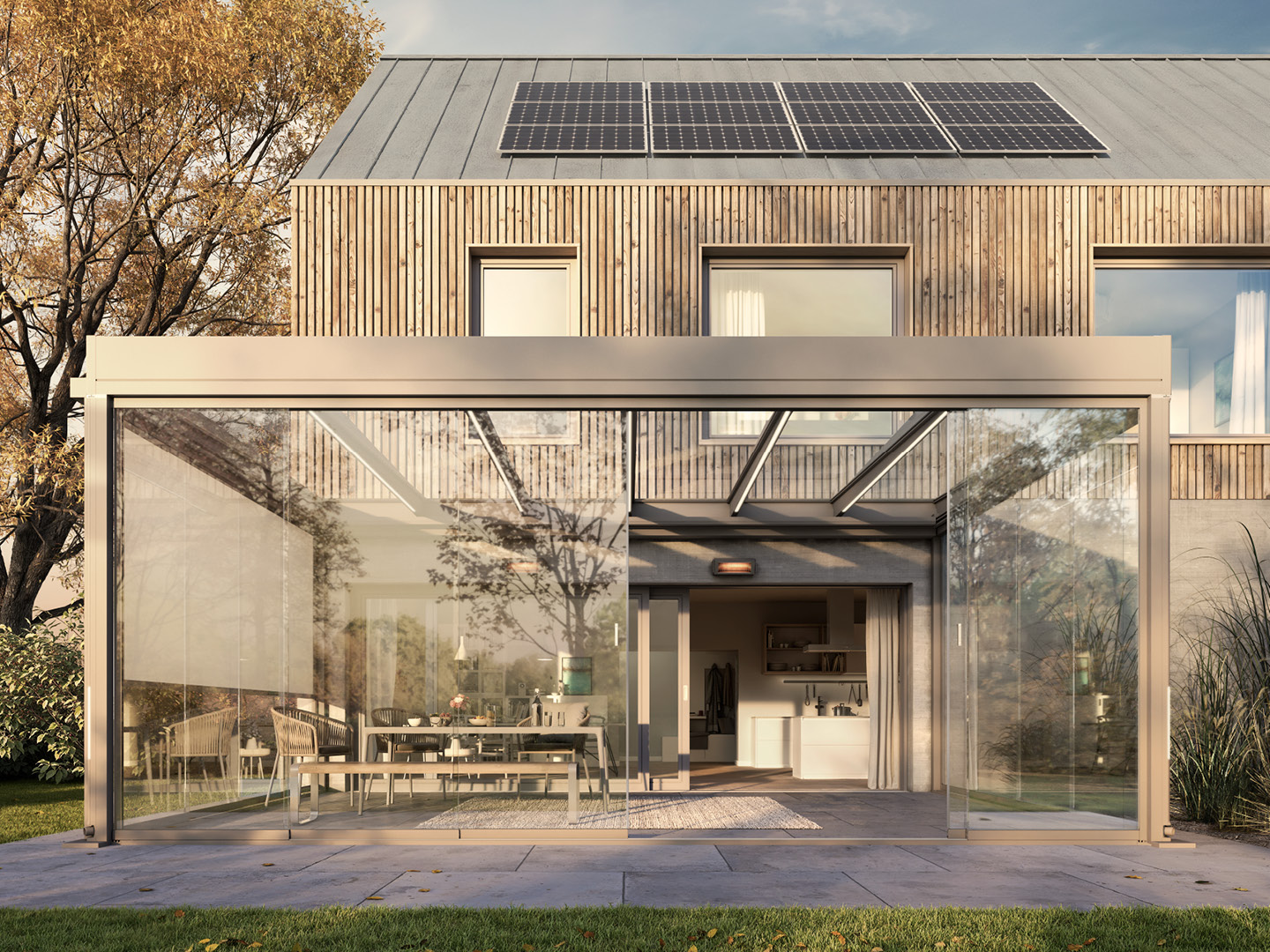
Clarity and appearance
Glass stays optically clear. Multiwall polycarbonate diffuses light and its internal ribs are visible from below.
Rain noise
Polycarbonate is noticeably louder in heavy rain. Under glass, conversation continues in a downpour.
Cleaning and weathering
Glass, especially with a self-cleaning coating, sheds dirt and algae more readily. Polycarbonate surfaces hold grime and can discolour over time.
Where polycarbonate makes sense
Tight budgets, very large low-priority spans, or structures where reduced weight solves a fixing constraint.
Frequently asked questions
Is glass safe overhead?
We use toughened safety glass, and laminated where the specification calls for it.
Does glass make it hotter underneath?
It can, in full sun. Solar-control or opal glazing, blades or blinds address that.
Can polycarbonate be swapped for glass later?
Only if the frame was designed for the heavier load; that is a survey question.
Which lasts longer?
Glass, in normal use. Polycarbonate has a shorter aesthetic life than structural life.
Next step
See both glazing options at survey before you decide.
Ready to Transform Your Outdoor Space?
Get a free, no-obligation quote. Email a photo of the area plus your preferred width, projection and operation type, and we'll do the rest.