
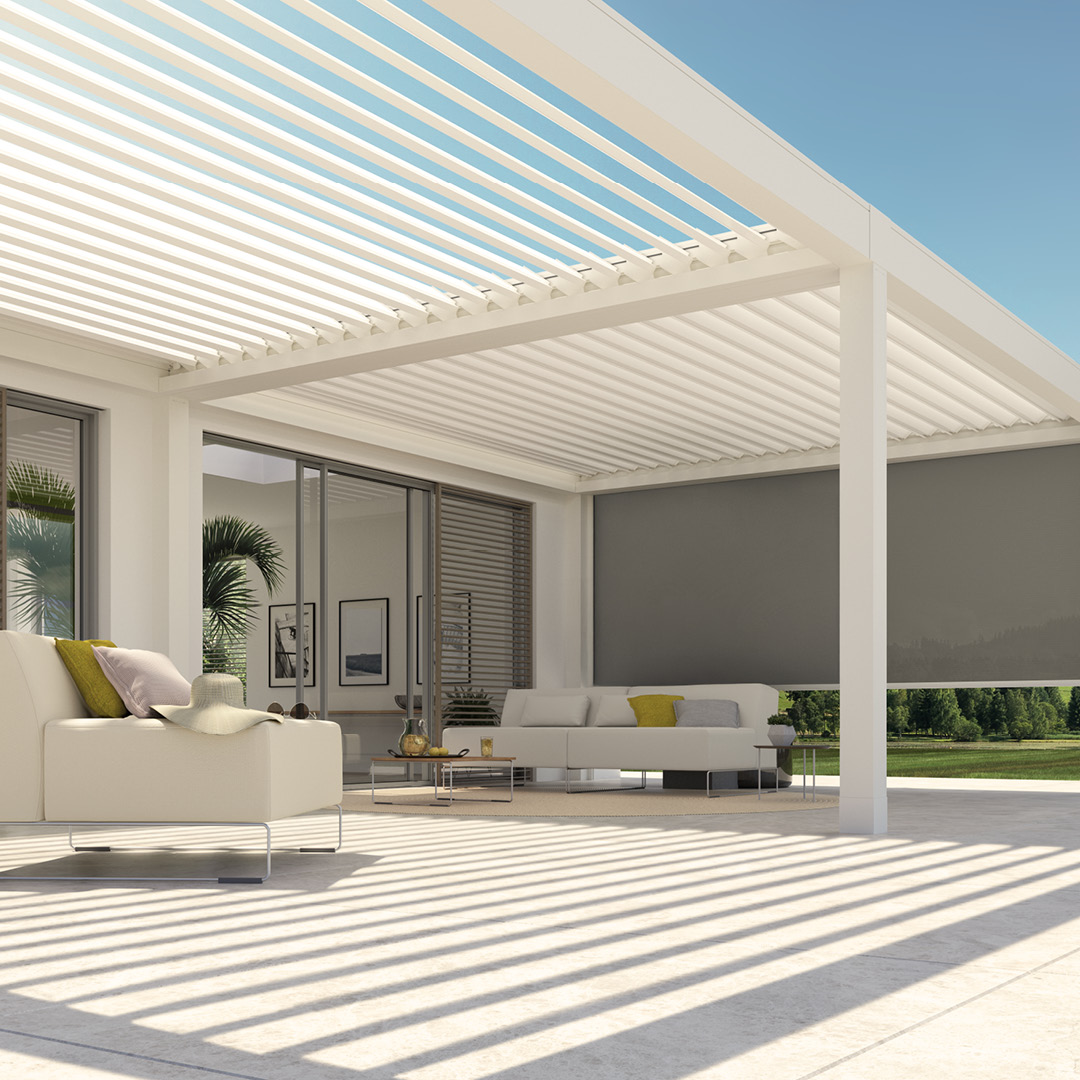
Freestanding Pergolas
An adjustable roof where you want to sit, without attaching it to the house.
A freestanding pergola supports its roof on its own posts rather than relying on a wall connection. That gives you a choice of position within the garden, provided the ground, drainage and access suit the structure. Infinity Verandas supplies and fits freestanding motorised louvred aluminium pergolas across Yorkshire and north Lincolnshire. Choose this arrangement when the best place for shade is away from the rear wall, or when you want the covered seating area to remain separate from the house.
Find the place you actually want to use
Start by observing the proposed position from the house and from the seats you intend to put beneath the roof. A pergola at the far end of a garden may catch evening light but require a longer walk with food and drinks. A position nearer the kitchen can be more convenient yet affect the outlook from a window. Keep the route between the two clear. Measure furniture with chairs pulled back, and allow for people passing around it rather than fitting the frame tightly around a table.
Independent posts still need proper support
Freestanding does not mean movable. The roof and posts form a permanent structure whose supports need to suit the ground below. Deck boards, paving slabs and artificial grass can conceal very different foundations. Before choosing a footprint, identify anything that may run below the proposed post positions and discuss it during the survey. On an uneven patio, the finished floor and roof drainage need to be considered together. Do not assume that an existing surface can take an anchoring detail simply because it looks firm underfoot.
Control the roof over an open garden space
Our louvred systems use motorised aluminium blades to alter shade and airflow. Opening the blades admits light and ventilation; closing them provides overhead shelter. A freestanding position exposes the structure on all sides, so the roof setting is only part of how the space feels. Think about the direction of low sun and the open approaches around the furniture. Remote control comes as standard on our louvred systems, with wind, rain and sun sensor options. Compare roof movement rather than treating every garden pergola as the same product.
Plan where roof water will leave
Rain collected by the closed roof runs through hidden gutters and down the posts. The destination at ground level needs planning even when there is no house wall involved. Water should not be directed onto the main walking route or towards an adjoining property. Existing garden levels may suggest a sensible outlet, but the survey needs to check the actual arrangement. Keep inspection and cleaning access in mind when setting posts beside planting. Concealed drainage is useful only when the outlet remains able to do its job.
Add sides without losing the garden connection
A zip screen can be useful on an edge affected by low sun, while side glazing retains a view with a more permanent barrier. Neither choice has to mean enclosing every side. Consider how you will enter the pergola and where panels or screens sit when open. Integrated LEDs and infrared heaters can be planned with the frame, but the electrical route from the building needs to be agreed. For a more enclosed brief, our enclosed pergolas page explains the relationship between roof, sides and ventilation rather than assuming an outdoor structure becomes an indoor room.
Freestanding pergola or freestanding veranda?
These terms describe different decisions. Freestanding identifies the support arrangement; pergola or veranda identifies the kind of roof and outdoor space. A louvred pergola lets you adjust the overhead opening. A veranda normally gives continuous cover beneath a fixed roof, including glass options. If your priority is constant daylight beneath transparent glazing, compare verandas before choosing louvres. If your priority is changing shade without moving the seating, the adjustable roof deserves a closer look. Bring that distinction into the free survey so the quotation follows your intended use.
Frequently asked questions
- Does freestanding mean the pergola can be moved?
- No. A freestanding installed pergola has its own supporting posts but still needs secure foundations and a planned position. It is not a portable garden shade.
- Can it be placed on an existing deck?
- The support beneath the deck needs assessment. The visible boards alone do not establish whether the proposed post positions can carry and anchor the frame.
- Does an independent frame still need electricity?
- A motorised louvred roof needs a suitable supply. Lighting, heating and screen options also affect the electrical brief, so discuss the route before installation.
- How do I compare a freestanding veranda with a pergola?
- Choose the roof experience first: fixed transparent cover or adjustable louvres. Then consider whether an independent frame is the appropriate way to support it in your garden.
Ready to Transform Your Outdoor Space?
Get a free, no-obligation quote. Email a photo of the area plus your preferred width, projection and operation type, and we'll do the rest.