
Enclosed Louvred Pergolas with Side Screens
An enclosed pergola combines a controllable louvred roof with sides chosen for the exposure of your patio. Zip screens, sliding glass or side panels can reduce the open edges without turning the structure into an indoor extension. Infinity Verandas fits louvred pergolas across Yorkshire: the roof, enclosure, drainage and heating need to be specified together if you want to sit outside during autumn and winter rather than simply add walls to a summer canopy.
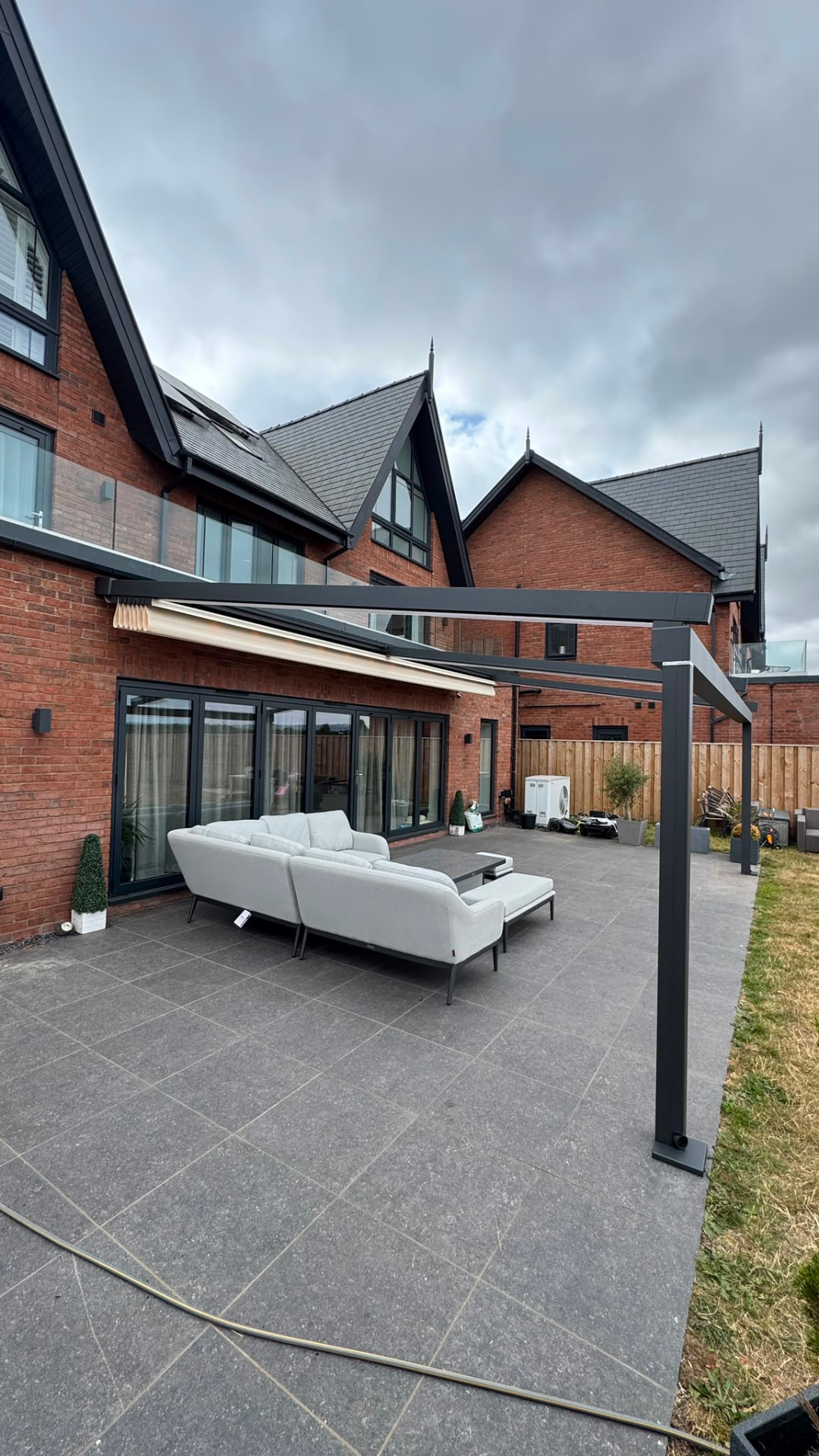
Choose which sides need protection
A closed roof addresses rain from above, but wind-driven rain can still reach the furniture through an open edge. Low winter sun and a view from a neighbouring window create different reasons to add a side treatment. Work out which issue applies to each edge before choosing an enclosure. The side facing the house may need an easy doorway, while an exposed garden edge needs a different arrangement.
Closing every side is not automatically the most useful solution. You still need movement between the house and garden, access for cleaning and a way to release warm air in better weather. A pergola should retain the flexibility that led you to choose an opening roof in the first place.
Zip screens, sliding glass and fixed panels
Zip screens offer a retractable boundary, so an edge can be screened when required and opened again afterwards. Sliding glass preserves an outward view while providing a more solid enclosure when closed. Fixed panels remain in position and need to be considered carefully around entrances and furniture. These options are not interchangeable: each changes the appearance, access and airflow of the pergola.
Think about where an opened screen or glass panel goes. A sliding arrangement needs somewhere to stack, while a fixed side cannot disappear on a warm afternoon. Ask about the compatible options for the chosen frame before settling on the roof. Screens and glazing should be specified for that structure, not selected separately on the assumption that they will fit later.
Warm the seating position and light the edges
Infrared heaters act on people and surfaces in their path rather than relying on an outdoor space holding warm air. Their position therefore matters as much as the decision to include them. Place the seating on the plan first, then consider the heater mounting points and clearances. An enclosure may reduce the draught, but it does not establish a promised indoor temperature.
Integrated LED lighting can make the perimeter, dining area and route out of the pergola visible after dusk. Consider a softer setting for sitting and a clearer setting for arriving or clearing the table. Confirm the available lighting controls with the selected system. Heating, lighting and screen controls belong in the order discussion so that cabling does not become an afterthought.
Roof operation, snow and water discharge
The louvre blades rotate up to 135 degrees and close to a weather-tight seal. When closed, the roof directs water into gutters concealed within the frame and then through the posts. That arrangement still needs a suitable discharge route at ground level. Side panels should not obstruct access to drainage points or disguise water collecting beside the seating area.
Frames are engineered for snow load, but the correct position of the blades during snow depends on the selected product's instructions. Do not assume that a rain sensor determines the right snow procedure. Discuss the operating guidance, drainage access and local exposure during the survey. Leaves and other debris need to remain reachable for maintenance even when the pergola has sides fitted.
Fit the frame to the house or garden
A wall-mounted pergola relates the covered area directly to the house, whereas a free-standing structure can form a separate garden setting. In either case, check door movement, ground levels and the places where posts will stand. An enclosed edge changes how people approach the structure; a frame that works as an open canopy may need a different entrance once glass is introduced.
Louvred modules are available up to 4.3m x 6m, with any RAL colour and remote control as standard. Wind, rain and sun sensors are options to discuss alongside the enclosure. Dimensions alone do not settle suitability: the complete layout needs to account for the mounting arrangement, side openings and the space needed to use the furniture comfortably.
Bring the enclosure into the initial quotation
For a free survey, send a photograph of the patio and give the width, projection and operation type you have in mind. Mark the edge where you want privacy or extra shelter. If the pergola already exists, include photographs of its frame and the product details so that a possible addition can be assessed rather than assumed.
Infinity Verandas provides in-house installation and is a sister company of Infinity Awnings. We can discuss roof and side choices with lighting and infrared heating in the same quotation. The comparison and screen guides below help with individual decisions; the enclosed pergola service brings those choices together around the actual dimensions and exposure of your outdoor space.
Questions about enclosed louvred pergolas with side screens
- Can side screens be added to a pergola later?
- That depends on the frame and its compatible screen options. Existing post positions, clearances and wiring can limit what is possible. Send the pergola details and photographs first; do not order a screen on size alone and assume it can be fitted.
- Do zip screens stay put in strong wind?
- Use a screen within the operating limits specified for that model. A zip-guided system does not remove the need to follow wind instructions. Check how the screens should be parked during severe weather and how any sensors interact with them.
- How warm does an enclosed pergola get with infrared heaters?
- There is no single temperature to promise. Exposure, openings, heater position and the distance to the seats affect how warmth is felt. Infrared heating can support an outdoor seating area, but an enclosed pergola remains an outdoor structure.
- Should the louvres be closed when it snows?
- Follow the instructions for your particular roof. An engineered snow-load specification is not a universal instruction to close the blades. Ask for the operating guidance when choosing the system and keep drainage routes accessible.
- Is an enclosed pergola the same as a glass room?
- No. A louvred pergola has an adjustable blade roof; a glass room uses a glazed roof with glass walls. Both can offer sheltered outdoor space, but their roof openings, daylight and ventilation arrangements differ. Neither should be assumed to be a heated living room.