
Retractable Fabric Against Fixed Adjustable Louvre Blades
A fabric roof pergola stretches PVC or acrylic fabric across a frame, often retractable; a louvred pergola has adjustable slats. Both attach to the house or stand alone. The fabric version gives you real weather protection when extended; the louvre gives you adjustable shade. This page compares how they actually work in practice across different Yorkshire seasons and uses.
Safety first: isolate power before touching a motorised system, and never work at height off a ladder alone. If in doubt, book a fitter rather than forcing a mechanism.
Fabric Pergola: Waterproof Shelter When You Need It
A fabric roof pergola stretches PVC-coated or acrylic fabric across an aluminium frame. When extended, the fabric is waterproof or near-waterproof (depending on the fabric grade). That means you can sit outside during drizzle, have lunch during a shower, or use the space right through an English spring without getting wet. When you retract it, usually by hand crank or motor, the pergola turns into an open structure. The frame is still there, but the weather protection is gone. This suits households who want shelter on demand: extend for bad weather, retract to let sun through on nice days. Fabric can be acrylic (lighter, breathable, sheds rain but not waterproof) or PVC (waterproof, heavier, holds water if not sloped, more durable in coastal salt air).
Louvred Pergola: Adjustable Light Without Full Weather Control
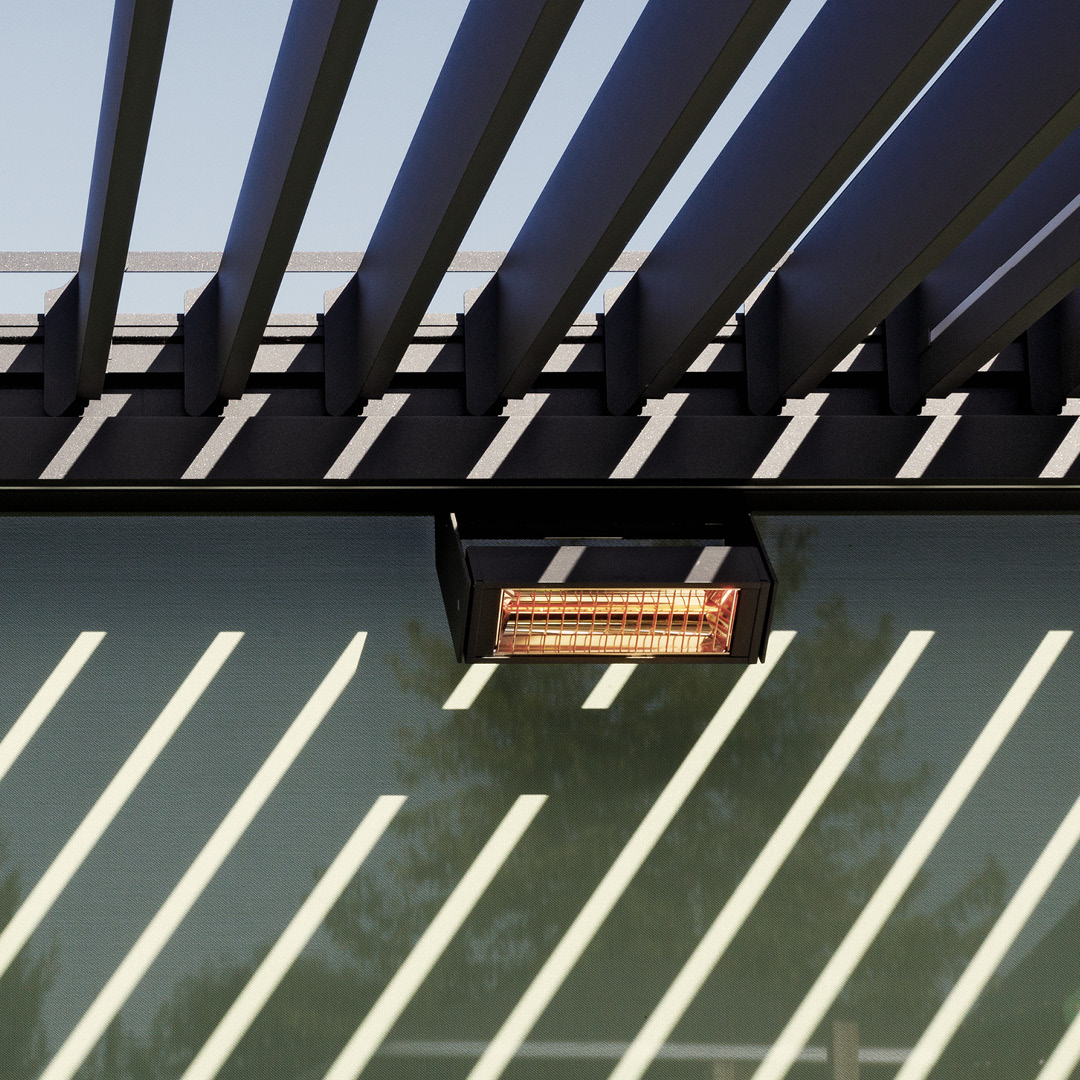
A louvred pergola has fixed or motorised slats angled to let through dappled light and some air. Unlike a fabric roof, it doesn't seal weather out. Rain passes through. Wind passes through. Sun passes through depending on the angle. The advantage is that the whole mechanism is very simple: there's no fabric to retract, no motors pulling fabric in and out, no seals to fail. Close the blades tightly, and you get shade; open them, and you get sunshine and breeze. In theory, closed blades shed some rain, but they're not weatherproof. The louvre is best suited to situations where you want variable shade over a garden area that's already somewhat sheltered, a north-facing patio where you're not expecting downpours, or a pergola over a deck where a bit of water dripping is acceptable.
Season-by-Season Usability: When Each Comes Into Its Own
In spring, when days are longer but afternoons cool, a motorised louvre helps: open it for morning sun, close it for shade after 2 p.m. A retractable fabric roof sits half-open, letting light through while keeping morning chill off. In summer, a louvre running full open creates dappled shade with airflow; a fabric roof extended creates sealed shade (useful on a scorching day). In autumn, when rain is frequent and sustained, a fabric roof extended is the only one giving true cover, you can work outside, dine, or relax without the weather affecting you. A louvre just drips. In winter, a retracted fabric roof and an open louvre are essentially the same: just the frame, full light. The real difference is that fabric gives you weatherproof options; louvres don't.
- Spring: louvre for shade control, fabric half-open for filtered light
- Summer: both work; louvre for airflow, fabric for sealed heat control
- Autumn: fabric extended is usable, louvre is dripping-wet
- Winter: both are open frame only
Retraction Mechanism: Motors, Cranks and Reliability Under Load
A retractable fabric roof needs a motor or manual crank to pull and retract thousands of kilograms of fabric and frame. The motor is under load constantly, and if it jams (often because fabric or frame has moved slightly out of square), you could be stuck with the roof half-extended until someone fixes it. Manual cranks don't have that risk but require physical effort each time, several minutes of work if you're opening and closing daily. A louvred pergola, if motorised, has a simpler job: rotating slats is less load-intensive than retracting fabric. If manual, turning a hand wheel to adjust blades is quick. For a household that expects to retract and extend daily, a motorised louvre is often more reliable than a motorised fabric roof just because of the mechanical simplicity.
Fabric Care and Staining Over Time
Fabric deteriorates. Acrylic is lighter and breathes (allowing some water through), but it takes UV damage and can fade. PVC is heavier, waterproof and resists UV better, but it can collect algae or staining if drainage isn't good or if the fabric sags and pools water. Both fabrics need occasional cleaning, hose them down twice a year or spot-clean stains. In a wet climate, fabric sitting half-open can grow algae faster than expected. A louvre, being hard surfaces (usually aluminium slats), doesn't have the same staining risk and is faster to clean. If low maintenance matters, a louvre wins; if weather protection matters, fabric wins despite the care.
Questions we get asked on repair calls
Can acrylic fabric on a pergola roof handle heavy rain?
Acrylic is water-resistant but not waterproof. In steady rain, some water passes through; in a downpour, water can accumulate if the fabric sags. PVC fabric is fully waterproof but heavier and requires good support and slope.
How often do retractable fabric roofs need cleaning?
Two to four times a year, depending on your location and the fabric grade. Coastal areas and damp climates see algae growth faster. Simple hose-down usually works; stubborn stains may need mild soap.
If I extend a motorised fabric roof and the motor fails, can I retract it by hand?
Most motorised fabric systems include a manual override or emergency crank, but not all. Check the product before ordering if this matters to you.
Do louvred pergolas create better airflow than fabric roofs?
Yes. Louvres are open to the sides and have gaps between slats; air moves freely. A fabric roof, even partially retracted, blocks airflow. On a still hot day, a louvre feels fresher.
Which is more expensive to install: a motorised fabric roof or a motorised louvre?
Typically the fabric roof is more expensive because of the motor load, the fabric supply and fitting, and the precision needed to get the retract mechanism square. Louvres are simpler mechanically.
Real-World Decision: What Does Your Garden Use Actually Demand
If you plan to use the space mostly in dry months or you're happy to come in when it rains, a louvred pergola is practical and simple. If you have a café-like expectation, people in the space regardless of weather, with drinks and food on tables, a fabric roof makes that possible. If you work from home in the garden during autumn, fabric gives you shelter. If you're a fair-weather user, louvres are lower upkeep. The most telling question: how many days a year will it be raining and you'll still want to be outside? If it's frequent, fabric. If it's rare, louvre.
In short
Fabric roofs keep you dry in rain; louvred pergolas adjust light and shade but don't seal weather out. Choose based on how often you'll need shelter from actual rainfall.
Get it looked at
Unsure whether you need sealed weather protection or adjustable shade? Walk us through how you use the garden, and we'll recommend which system actually serves you best.
Ready to Transform Your Outdoor Space?
Get a free, no-obligation quote. Email a photo of the area plus your preferred width, projection and operation type, and we'll do the rest.