
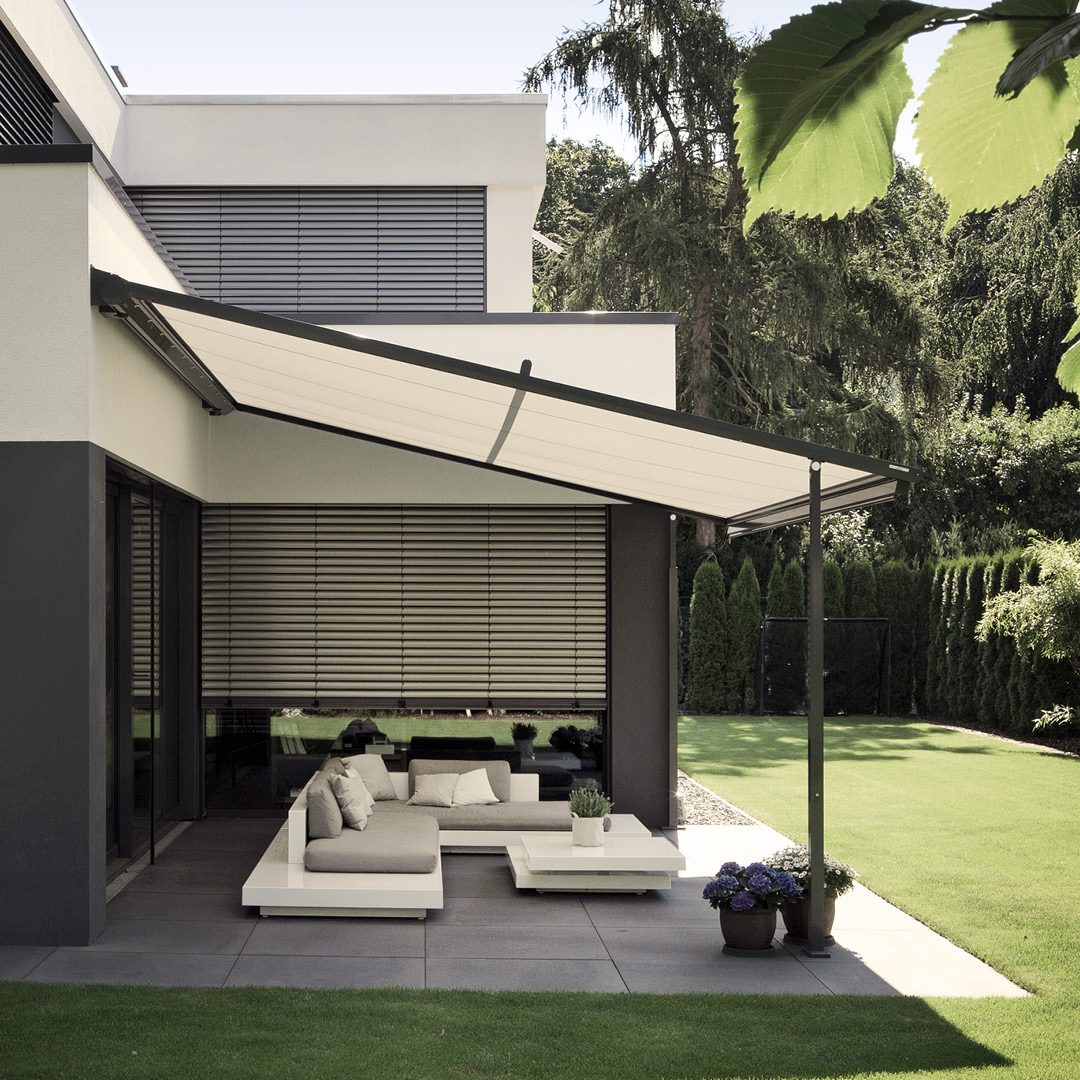
Designing for Rain on a North-East Elevation
A north-east facing veranda faces a less commonly discussed exposure than the south-westerlies most weather guides focus on, but easterly and north-easterly rain events, though less frequent, can be sharper and colder, and they catch elevations that are otherwise sheltered from the prevailing wind off guard.
Why north-east weather events differ from prevailing conditions
Yorkshire's prevailing wind is broadly south-westerly, so many gardens are designed and screened with that direction in mind. When an easterly or north-easterly system does move through, often associated with colder winter rain or occasional snow, it can catch elevations that have never needed screening against the prevailing wind, arriving at an angle few features on that side of the house were designed to resist.
Comparing exposure between the two elevations
A south-west facing veranda usually has screening, planting or an established shelter belt because that's the direction most weather comes from. A north-east facing veranda, by contrast, may have no such provision at all, meaning that when a north-easterly rain event does arrive, water can drive further under the roof and against glazing that has had no prior reason to be sealed against angled rain from that side.
Screening choices worth considering on an under-protected elevation
Rather than screening a north-east elevation to the same degree as a south-west one, a lighter provision, such as a single retractable zip screen on the most exposed corner, often strikes a reasonable balance between year-round openness and protection during the occasional sharp north-easterly spell.
- A single screen on the most exposed corner
- Sealant checked specifically on this elevation, not just the south-west side
- Furniture positioned away from the most exposed corner
- Glazing seals inspected after any north-easterly storm
Sealant and glazing implications
Because a north-east elevation may not have been checked as routinely as a south-west facing one, it's worth including it explicitly in any seasonal inspection routine, checking wall-plate joints and roof-to-glazing seals on that side with the same attention given to the more obviously exposed elevation.
A balanced approach rather than over-specifying
It isn't necessary to specify a north-east elevation to the same standard as a genuinely exposed coastal or hillside plot; the aim is simply not to overlook it entirely because it's less frequently in the weather's path.
Deciding between the two: common questions
Is a north-east facing veranda less exposed overall than a south-west one?
Generally yes in terms of frequency, since prevailing wind and rain come from the south-west, but it can still experience sharp, less frequent events from the north-east that catch an unprepared elevation off guard.
Should I screen a north-east elevation the same as a south-west one?
Not necessarily to the same degree, but a single screen on the most exposed corner is often a sensible middle ground rather than leaving the elevation entirely open.
Why does north-easterly rain feel colder even at a similar wind speed?
Air arriving from the north-east often has a different origin and moisture content to the milder south-westerly airflow, which is why these events are frequently associated with colder conditions.
Do I need different sealant on a north-east elevation?
The sealant specification doesn't need to differ, but including that elevation in your regular inspection routine matters since it's easy to overlook.
Can existing planting help protect an exposed north-east corner?
Established planting or a fence panel can reduce wind-driven rain reaching that corner, though it takes time to establish and works best alongside, not instead of, appropriate screening.
In short
North-east facing verandas see less frequent but sometimes sharper wind-driven rain than the prevailing south-west side, and are easy to under-screen simply through habit.
What to do next
Ask us to assess both elevations of your patio, not just the obviously exposed side, at survey.
Ready to Transform Your Outdoor Space?
Get a free, no-obligation quote. Email a photo of the area plus your preferred width, projection and operation type, and we'll do the rest.