
Building for Wind on the Peak District Boundary
Gardens on the higher ground around Sheffield and towards the Peak District boundary sit more exposed than a sheltered valley plot a few miles away, and that difference shows up in how a veranda or pergola needs to be fixed and braced, not in the headline design.
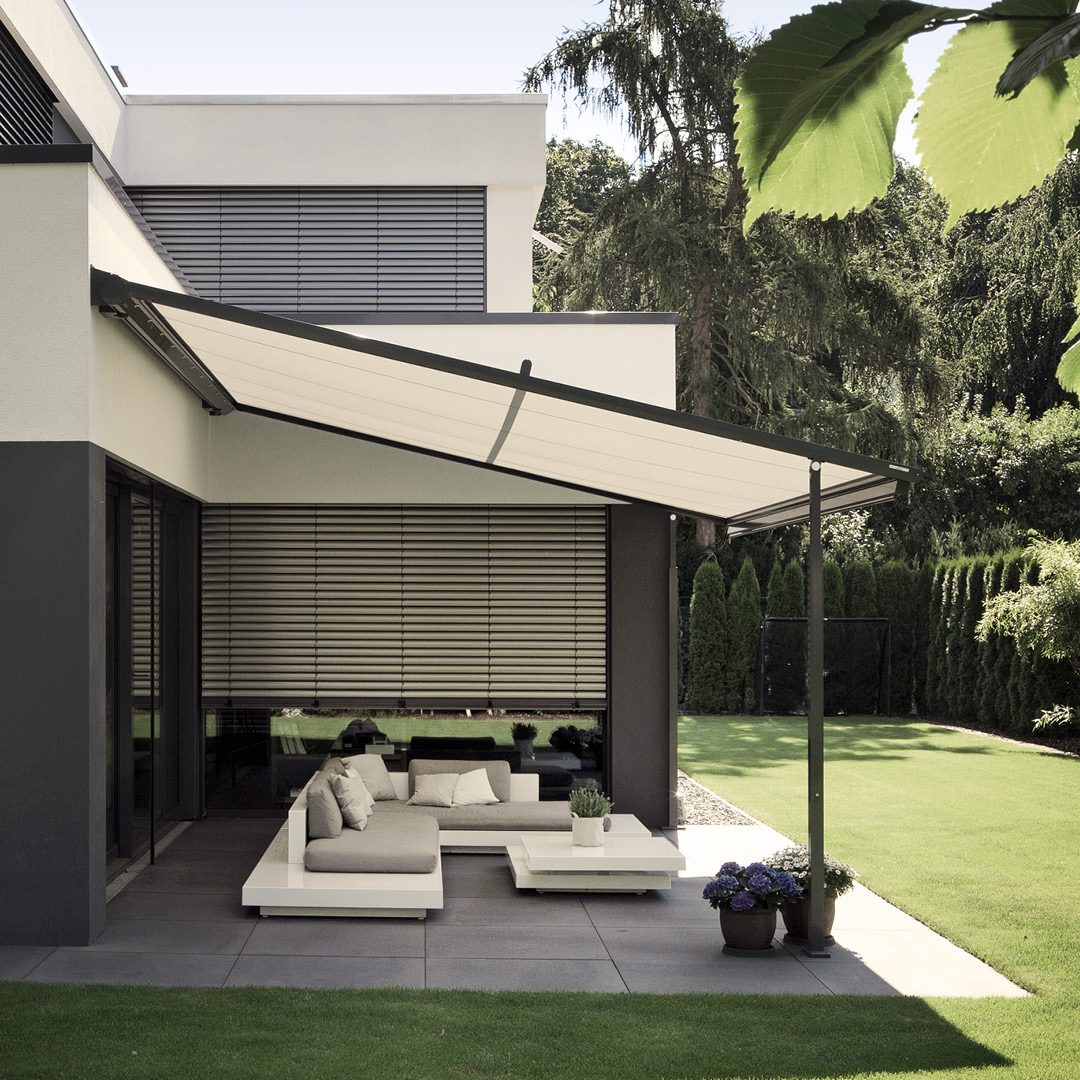
Reading the exposure of a plot before quoting
An installer assessing an elevated garden looks at what shelters it, a house wall, a hedge line, neighbouring buildings, and what doesn't. A plot open to the west with no windbreak behaves differently to one tucked behind a two-storey extension, even at the same elevation.
Post spacing and section size
Closer post centres and a heavier box-section post carry wind load into the ground more reliably than a wide span designed for a sheltered site. This is a specification decision made at survey, not an upgrade offered later.
- Post centres tightened on exposed elevations
- Box-section over slimmer profiles where load is higher
- Base plates matched to ground conditions
- Bracing considered on longer runs
Roof glazing and fixing detail
Glass and polycarbonate roof panels are held by a fixing and seal system rated for wind uplift as well as weight. On exposed ground the seal detail and clamping pressure matter as much as the glass specification itself.
Free-standing structures versus wall-attached
A free-standing pergola on open ground relies entirely on its own footings and bracing, whereas a wall-attached veranda shares some of that load with the house. On a very exposed plot this can be a genuine reason to favour attachment where the wall allows it.
A seasonal check for exposed sites
After the autumn and winter storm season it's worth walking the structure and checking fixings, glazing seals and any screens or blinds for wear that wouldn't show on a sheltered site.
- 1Check post base fixings each spring
- 2Inspect roof seals after named storms
- 3Test retractable screens for smooth operation
- 4Look for movement at wall-plate junctions
Common questions
Does an exposed garden always need a stronger structure?
Not automatically, but a surveyor will factor exposure into the post spacing, bracing and fixing spec rather than treating every plot the same.
Is a pergola or a veranda better on an open plot?
Both can work; a wall-attached veranda often has an advantage because part of the load is shared with the building, but a well-braced free-standing pergola is also viable.
Should I add screens if the garden is windy?
Retractable screens can help block wind-driven rain but should be specified with wind-rated tracks and, ideally, a sensor that retracts them automatically in strong gusts.
Do I need planning permission for a taller frame on exposed ground?
Height and position still fall under the usual permitted development rules; exposure itself doesn't change the planning position, so confirm specifics with your council.
In short
Elevated gardens near the Peak District boundary need tighter post spacing, wind-rated roof fixings and a post-storm inspection routine rather than a different product altogether.
What to do next
Get a site-specific wind assessment as part of your free survey.
Ready to Transform Your Outdoor Space?
Get a free, no-obligation quote. Email a photo of the area plus your preferred width, projection and operation type, and we'll do the rest.