
Living With Valley Fog and Lingering Damp Air
Gardens set low along a river valley, such as stretches near the Don or the Aire, often sit under fog and damp air for longer stretches than a property on higher ground just a short distance away, because cold, moist air settles and lingers in low terrain. That persistence changes how a veranda or glass room needs to manage moisture.
Why cold air pools in low ground
As the surrounding land cools overnight, denser cold air drains downhill and collects in the lowest part of the terrain, carrying moisture with it. A valley-bottom garden can sit under this pooled, humid air for hours after a hillside plot nearby has cleared into bright morning sun.
How lingering damp air affects a veranda structure
It isn't the fog itself that causes problems so much as the extended period surfaces stay wet before they get a chance to dry. Aluminium frames and toughened glass shrug this off, but timber decking beneath a roof, exposed fixings and fabric components benefit from the same drying opportunity a less foggy garden gets naturally.
Ventilation choices for persistently humid air
A solid insulated roof over a valley-bottom seating area can trap humid air beneath it if there's no route for that air to move, particularly where the structure is enclosed on more than one side with glass walls.
- Roof vents or a ridge gap where the design allows
- Partial rather than full glazing on more than one elevation
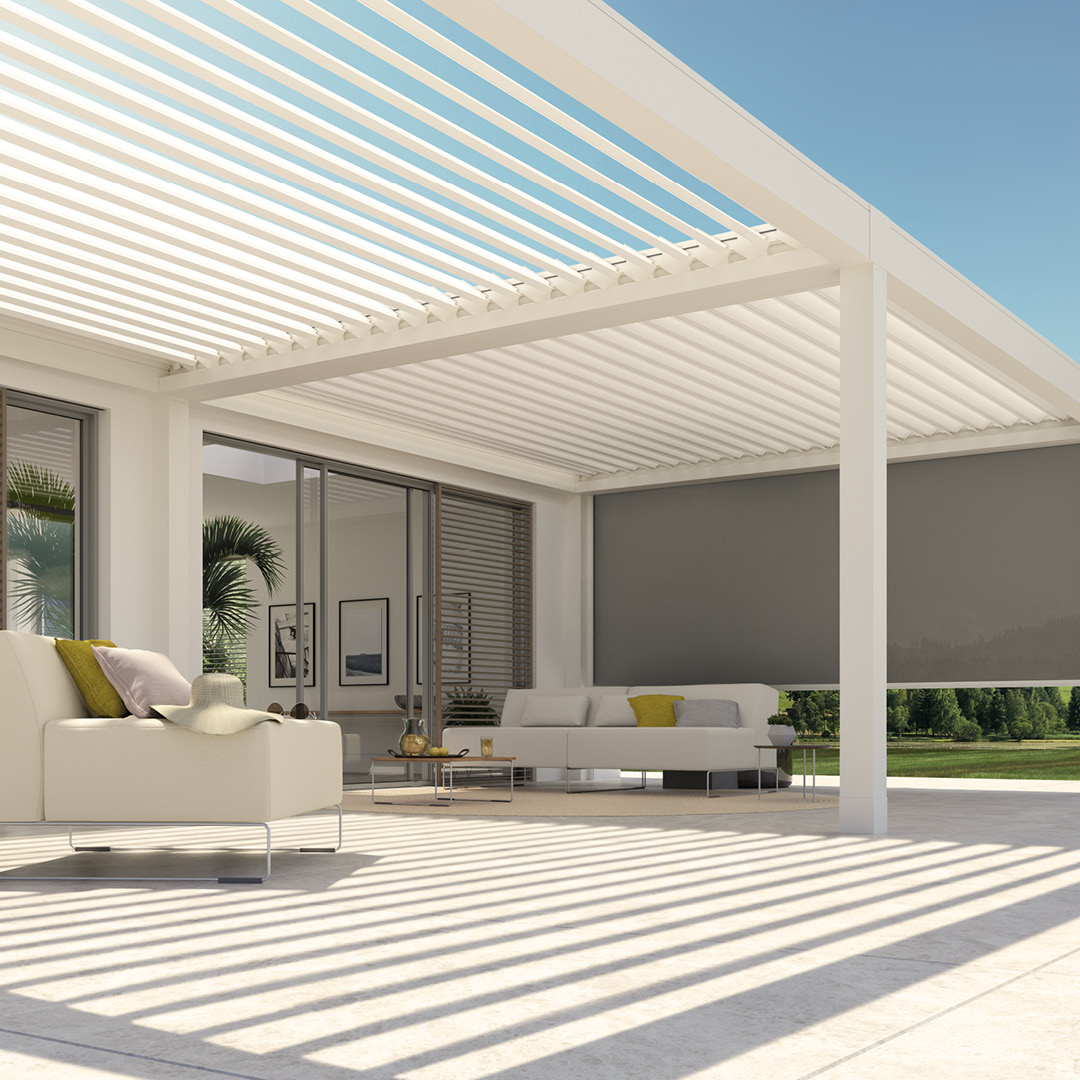
- Louvred roof sections that can be opened to circulate air
- Avoid fully sealing all sides of an enclosed glass room
Fixings and finishes for a consistently damp microclimate
In a valley garden that holds moisture longer than average, stainless fixings and well-detailed sealant joints earn their keep even without any salt exposure, simply because components spend more hours per week in a damp state than they would on higher, drier ground.
Managing timber decking and furniture beneath the roof
Where the veranda covers timber decking, raising boards slightly and choosing a decking profile with good drainage grooves reduces how long moisture sits against the wood after a foggy night, extending the interval between re-treatments.
Common questions
Does fog actually cause damage, or just look unpleasant?
Fog itself doesn't damage aluminium or glass, but the extended damp period it creates can affect timber, fixings and fabric if ventilation and material choice don't account for it.
Should I avoid a fully enclosed glass room in a valley garden?
Not necessarily, but building in some ventilation, such as opening panels or a roof vent, helps humid air move rather than sit trapped against the roof.
Is condensation inside a glass room linked to valley fog?
They're related but not identical, condensation happens when warm internal air meets a cold surface, while valley fog is an external humidity pattern, though both point to the same need for good airflow.
Do I need different fixings just because my garden sits in a valley?
It's a reasonable question to raise at survey; stainless fixings are a modest upgrade that can be worthwhile if your plot regularly holds damp air longer than surrounding areas.
Will a louvred roof help with valley dampness?
Yes, in that it can be opened to encourage airflow during damp mornings, which a fixed solid roof can't offer in the same way.
In short
Valley-bottom gardens hold cold, damp air longer than surrounding ground, which favours ventilated roof designs, stainless fixings and well-drained decking beneath the structure.
What to do next
Talk to us about ventilation options if your garden regularly holds fog or damp air.
Ready to Transform Your Outdoor Space?
Get a free, no-obligation quote. Email a photo of the area plus your preferred width, projection and operation type, and we'll do the rest.