
Managing Rain Ingress and Seal Failures in Louvred Pergolas
A louvred roof is designed to be water-resistant, directing rain into internal gutters via interlocking blades. However, ingress can occur if the EPDM gaskets perish, the blades are misaligned, or the drainage capacity is exceeded. Unlike a fixed glass roof, a louvred system has hundreds of metres of potential seal interfaces. Understanding how these seals compress and how water behaves during the transition from blade to gutter is key to diagnosing and fixing leaks.
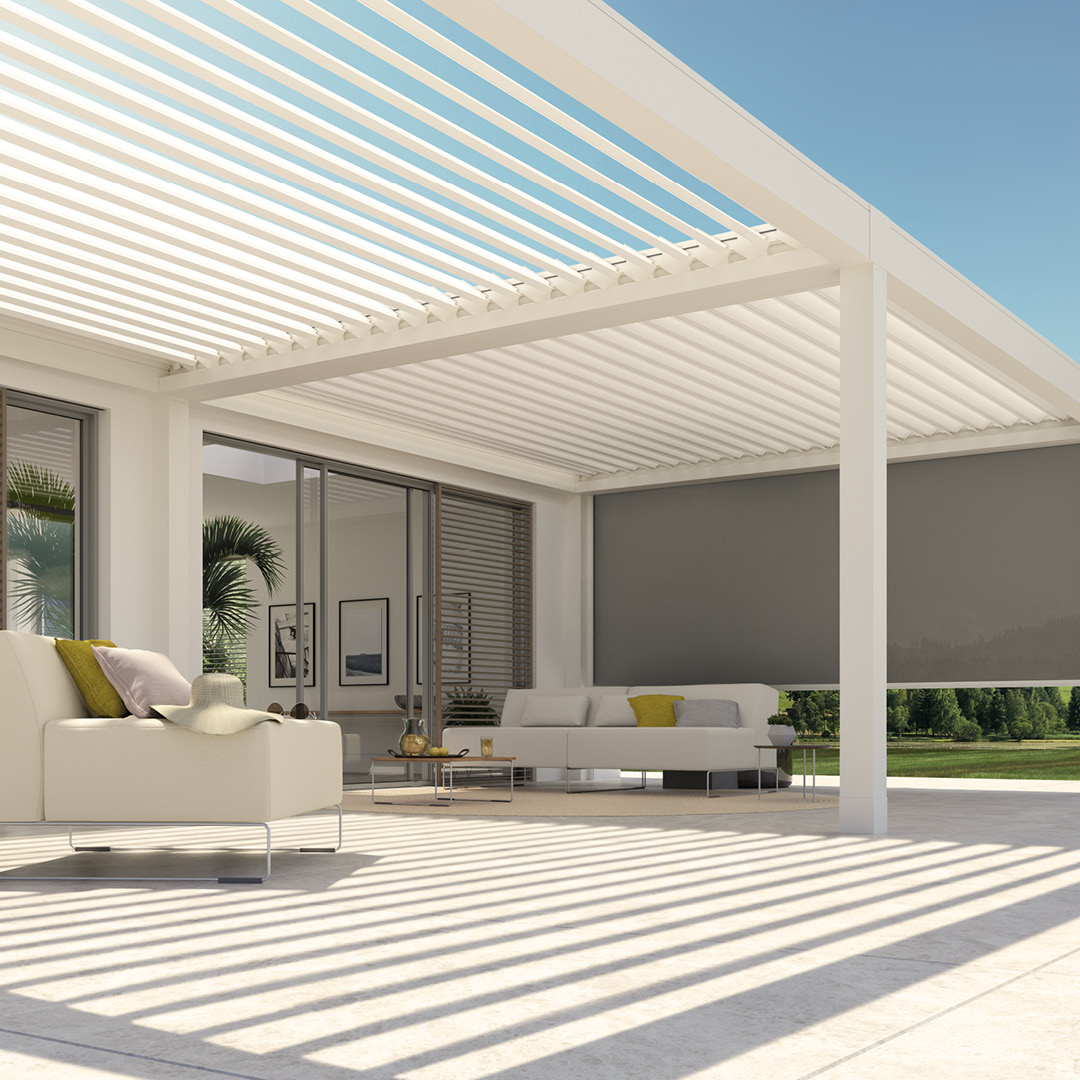
Safety first: isolate power before touching a motorised system, and never work at height off a ladder alone. If in doubt, book a fitter rather than forcing a mechanism.
Gasket Compression and Elasticity
Each louvre blade is fitted with a flexible gasket that creates a seal with the adjacent blade. Over years of exposure to UV and extreme temperatures, these gaskets can lose their elasticity or 'set' in a compressed shape. If the gaskets do not spring back, they fail to create a watertight barrier. Replacing these seals or adjusting the motor tension to increase compression can often resolve persistent drips.
Never use petroleum-based lubricants on rubber gaskets as they cause the material to perish.
The 'First Drop' Effect
When you open a louvred roof after rain, water can sometimes drip onto the patio. This is often mistaken for a leak. If the blades are not designed with a 'dry-opening' feature, the surface tension holds water on the edge of the blade, which then drops as the angle changes. High-quality systems use a specific blade profile to ensure this water is channeled back into the gutters even during the opening cycle.
Gutter-to-Post Transition Leaks
The most common point for true ingress is at the corners where the horizontal perimeter gutters meet the vertical downpipes. These joints rely on high-grade sealants or mechanical gaskets. If the structure has settled or if the sealant has pulled away due to thermal expansion, water can bypass the downpipe and run down the inside of the frame or even drip from the ceiling-side of the beam.
- Inspect corner mitres for visible sealant gaps
- Check the 'leaf trap' at the downpipe entry
- Ensure the roof is perfectly level (or has the correct fall)
- Look for 'tracking' water marks along the internal beams
Questions we get asked on repair calls
Is a louvred roof 100% waterproof?
They are designed to be 'watertight' under normal conditions, but because they are made of moving parts, they are not technically a 'hermetically sealed' structure like a conservatory roof.
Why is water dripping from the motor housing?
This is a serious issue that suggests water is tracking along the drive rail or through the wiring loom. It should be inspected immediately to prevent electrical failure.
Can the seals be replaced without taking the roof apart?
In most modern systems, the gaskets are 'push-fit' into a groove on the blade and can be replaced while the blades are in the vertical position.
Does the pitch of the roof affect the seals?
Yes. Even 'flat' louvred roofs are usually built with a tiny internal fall. If the structure has shifted and is now 'back-falling', water will pool on the blades instead of running into the gutters.
Wind-Driven Ingress and Overspill
In extreme Yorkshire weather, wind can force water uphill or over the upstands of the internal gutters. This 'forced ingress' is a physical limit of any moving roof system. However, if it happens in moderate rain, it usually suggests the gutters are partially blocked, causing the water level to rise until it spills over the internal 'dam' wall and into the area below.
- 1Clear the perimeter gutters of all organic debris
- 2Verify the downpipes are not backed up (causing the gutters to fill)
- 3Check the blade pitch to ensure water is shed rapidly
- 4Consider side-screens to reduce wind-driven rain penetration
In short
Water ingress in louvred systems is typically linked to gasket wear or corner joint failure, both of which are fixable with professional attention.
Get it looked at
Experiencing drips under your louvred roof? Our team can identify if it's a seal failure or a drainage blockage.
Ready to Transform Your Outdoor Space?
Get a free, no-obligation quote. Email a photo of the area plus your preferred width, projection and operation type, and we'll do the rest.