
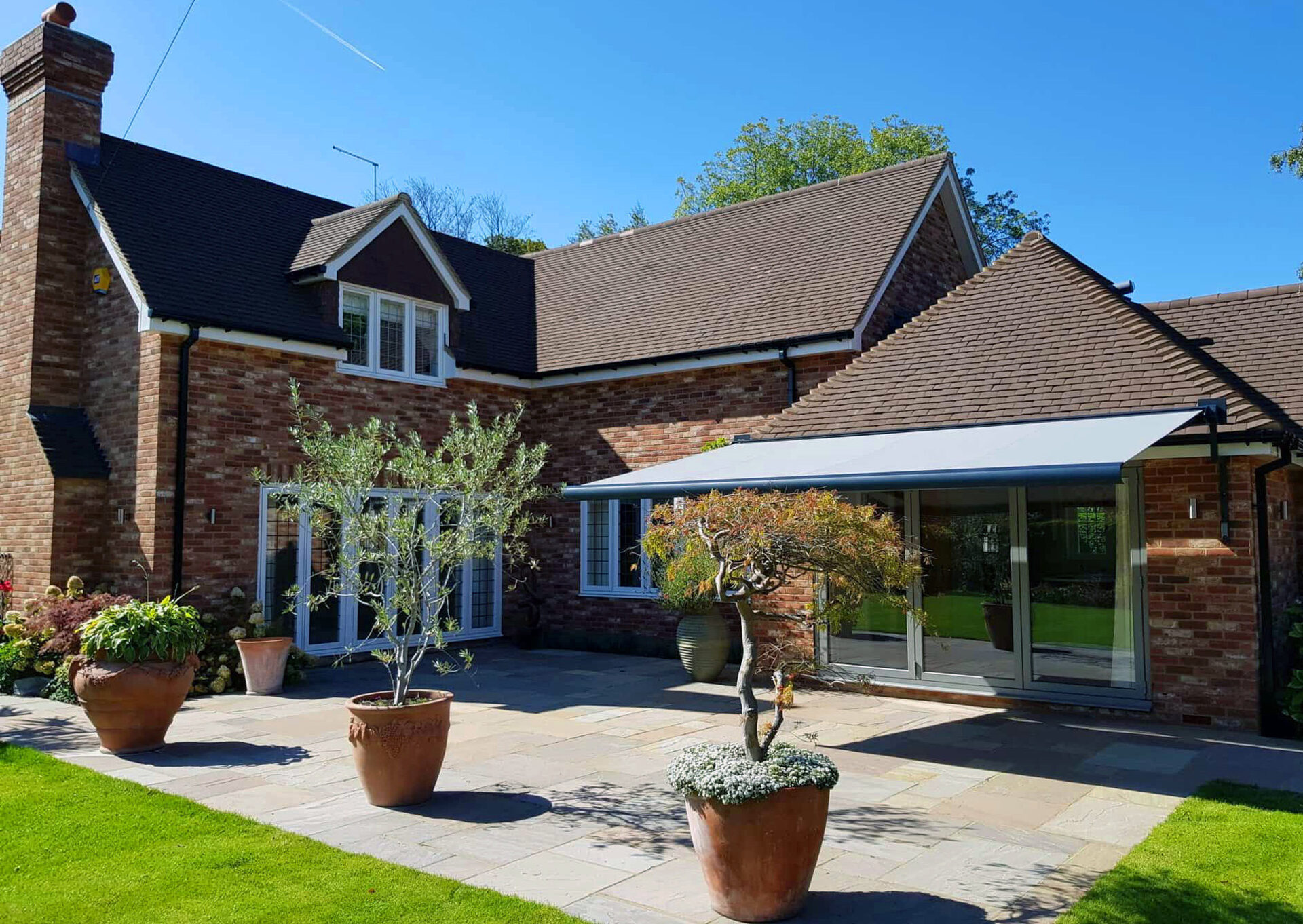
When Your Awning Refuses to Come In
A stuck-out awning is usually a nuisance rather than an emergency, but leaving a fabric arm awning extended into wind or heavy rain is how tears and bent arms happen. Most retraction faults trace back to one of a handful of causes, and a fitter can usually tell which within minutes on site.
Safety first: isolate power before touching a motorised system, and never work at height off a ladder alone. If in doubt, book a fitter rather than forcing a mechanism.
Wind sensor override
Many motorised awnings have a wind sensor that locks the drive out until conditions calm, and some will not let you retract at all while the sensor reads gusts above its threshold, treating retraction the same as extension. This is a safety feature, not a fault, and it clears itself once wind drops. Check the control unit for a wind icon or flashing light before assuming anything is broken.
Obstructed arms or fabric
A branch resting on an arm, a bird's nest in the elbow joint, or fabric that has snagged on a bracket can jam the mechanism partway. Look along both arms from ground level rather than climbing up, and clear anything obvious by hand before trying the switch again.
- Check both arm elbows for debris
- Look for fabric caught on a wall bracket
- Confirm nothing is resting on the front bar
Motor or gearbox failure
If the motor hums but the arms do not move, or there is no sound at all, the tubular motor or its gearbox may have failed internally. This is not something to strip down yourself, the motor sits inside the roller tube and needs the fabric removed to access it, which is a fitter's job.
Remote or control fault
Before assuming a mechanical fault, rule out the handset: check batteries, try any wired wall switch if fitted, and see whether a neighbouring awning on the same system responds. A remote that has lost its pairing will usually still let you extend but not retract, or vice versa, depending on the last command sent.
Questions we get asked on repair calls
Is it safe to leave the awning out overnight if it won't retract?
For one night in calm weather it is unlikely to cause harm, but check the forecast. If rain or wind is expected, it is worth manually winding it in if a crank handle override is fitted, or covering the motor housing.
Can I force the arms in by hand?
Only if the awning has a manual crank override built into the motor. Forcing folding arms by hand on a motor without an override can strip the gearbox and turn a simple fault into a full motor replacement.
Does a power cut affect retraction?
Yes, most tubular motors need mains power to move, so a fuse trip or local outage will stop the awning responding until power is restored, even though the remote batteries are fine.
Will a fitter need to remove the whole awning?
Not usually. Motor and sensor faults are normally accessed by lowering the fabric slightly rather than removing the full assembly from the wall.
What a repair visit involves
A fitter will typically test the motor with a multimeter, inspect the wind sensor wiring, and check the arm tension springs before quoting for parts. Motors are usually swapped rather than repaired, and the visit includes taking the fabric off the roller to reach the tube.
In short
Retraction faults are usually wind-lockout, an obstruction, a failed motor, or a remote pairing issue, most need a fitter to open the roller tube.
Get it looked at
If your awning has stopped retracting and the checks above haven't cleared it, we can send a fitter out to diagnose the motor and sensor.
Ready to Transform Your Outdoor Space?
Get a free, no-obligation quote. Email a photo of the area plus your preferred width, projection and operation type, and we'll do the rest.