
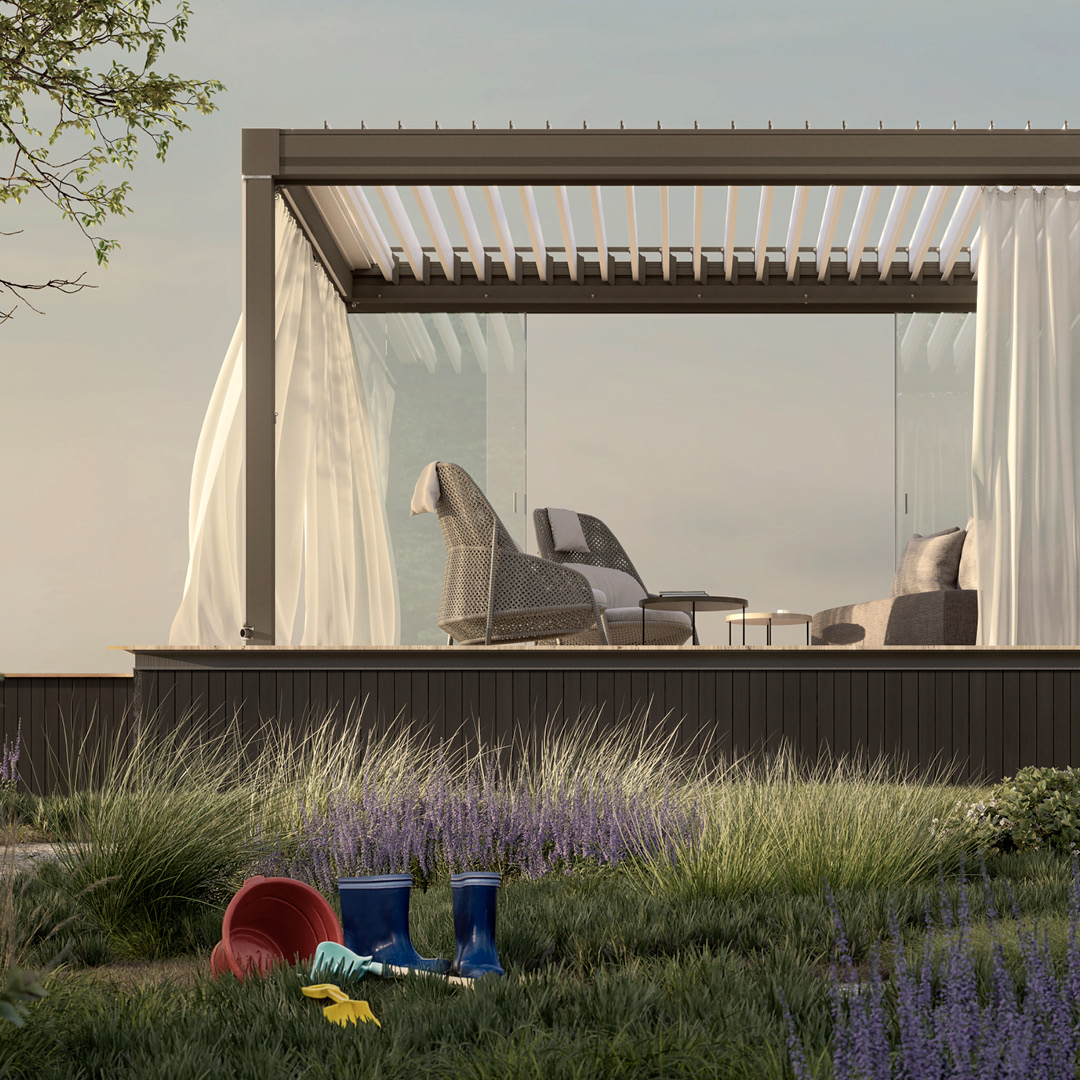
Outdoor Blinds for Verandas, Pergolas and Patios
Zip screens and side screens that cut glare, block low sun and take the edge off the wind, fitted to your structure.
Outdoor blinds turn a covered structure into a space you can use in more kinds of weather. A zip screen runs in side channels so the fabric stays taut, blocking low sun, glare and draughts while keeping the view; side screens pull across an opening to shelter a particular side. Infinity Verandas supplies and installs outdoor blinds for verandas, pergolas and patio areas across Yorkshire and north Lincolnshire, as part of a new structure or added to an existing one. Every project starts with a free survey of the openings and the frame.
What a zip screen does
A zip screen is a vertical blind whose fabric edges are held in slim side channels from top to bottom. Because the fabric cannot billow, it stays put in a breeze and seals the opening against wind, driven rain and insects to a useful degree. Lower it when the sun swings round to the side of your veranda, raise it when you want the opening clear. It is the difference between a structure you use on perfect days and one you use most of the year.
Where outdoor blinds earn their place
The front and sides of a glass veranda are the obvious openings, but zip screens also suit the sides of a pergola, the gable end of a carport seating area, or a patio that catches the late sun. On a west-facing structure, a screen on one side can make evenings usable without closing the whole space in. The survey looks at which openings actually need screening, because the windward and sunset sides matter far more than the sheltered ones.
Choosing the fabric
Screen fabrics are woven to different openness levels. An open weave keeps the view and cuts glare, which suits a structure you sit in to look at the garden. A closer weave gives more privacy and more shelter, which suits a structure overlooked by neighbours or exposed to the weather. Colour affects heat and light too: darker fabrics are easier to see through, lighter ones reflect more heat. We can talk through samples at the survey so the choice is made with the fabric in hand.
Manual or electric operation
Smaller screens can be operated by hand; larger or frequently used ones are usually electric, which makes it easy to adjust several screens as the sun moves. Electric operation also allows sensors, so the screens can raise themselves in strong wind. Any fabric screen should be retracted in high winds, and electric blinds with sensors take the responsibility off your memory. The electrical supply is planned during the survey, not after the structure is up.
Blinds alongside awnings and roofs
Outdoor blinds work with the shade you already have. Under a veranda roof or an extended awning, a zip screen deals with the low sun and side wind that overhead cover cannot reach. If you are still deciding on the main structure, our zip screens and side glazing guide compares fabric screens with fixed glass panels, and our glass verandas with sides page covers the glazed option. The right answer depends on how enclosed you want the space to feel.
Tell us about your structure
Send a photograph of the veranda, pergola or patio with rough opening sizes, and tell us which direction it faces and what bothers you most: glare, wind, privacy or rain. We offer a free survey and quotation, with installation carried out by our own fitters. Call 0114 312 3771 to talk through the options for your structure.
Frequently asked questions
- What is the difference between a zip screen and a side screen?
- A zip screen is held in side channels along its full height, so it stays taut and blocks draughts and low sun. A simpler side screen pulls across an opening like a horizontal blind and suits sheltering a specific side.
- Can outdoor blinds be added to an existing veranda or pergola?
- Often yes, provided the frame can carry the fixings and there is room for the cassette and channels. The survey checks the structure and the opening sizes before anything is specified.
- What affects the cost?
- The number and size of the openings, the fabric choice, whether the blinds are manual or electric, and the fixing arrangement all shape the specification. Electrical work for motorised blinds is planned at survey.
- Do outdoor blinds block the view?
- Screen fabrics come in different openness levels. A more open fabric keeps the view and cuts glare; a closer weave gives more privacy and shelter. Samples make the difference easier to judge than descriptions.
- Can they stay down in wind?
- Zip screens cope better with wind than loose blinds because the fabric is held in channels, but any fabric screen should be raised in strong wind. Electric operation with sensors can do this automatically.
Ready to Transform Your Outdoor Space?
Get a free, no-obligation quote. Email a photo of the area plus your preferred width, projection and operation type, and we'll do the rest.