
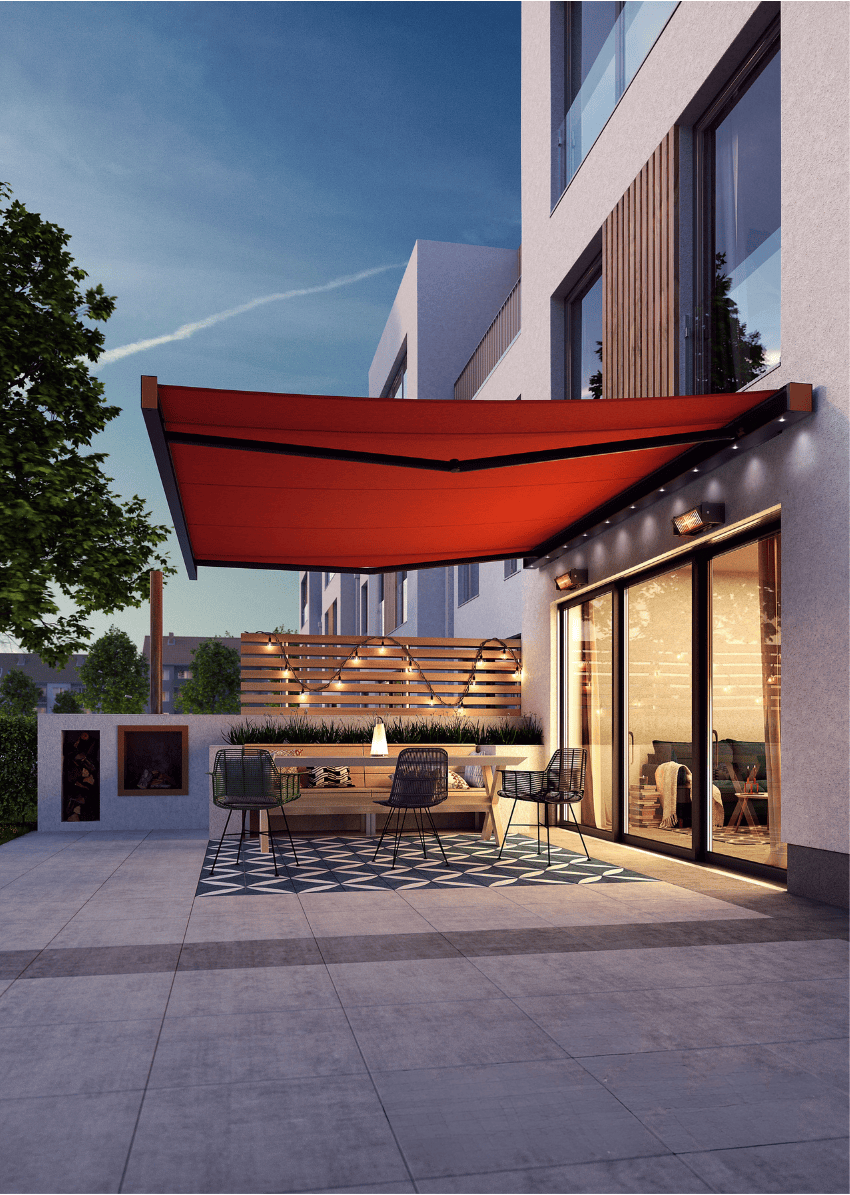
Building Light and Warmth Into the Frame Itself
Integrated LED lighting and infrared heating have become standard options on most veranda and awning ranges, built into the frame profile itself rather than fitted as a visible bolt-on accessory afterward. Planning for them at design stage avoids surface-mounted cabling and awkward retrofits later.
Where LED strips typically sit
LED lighting is commonly recessed into the front beam, the underside of the roof structure, or along the posts, running on low-voltage cabling concealed within the extrusion itself so no visible wiring runs across the finished structure. Dimmable and colour-adjustable options are both widely available.
Infrared heaters and how they warm a space
Infrared heaters warm objects and people directly through radiant heat rather than heating the surrounding air, which makes them effective in a semi-open veranda where air heating would simply escape. They're typically mounted to the roof structure or a wall bracket, angled toward the seating area.
Planning cable routes before the frame is ordered
Both lighting and heating need power run to specific points, and it's far tidier to have cabling routed through the frame during manufacture than to chase cables in afterward. Even if you don't want heating on day one, asking for the wiring to be pre-run is a low-cost, sensible precaution.
- 1Decide lighting and heating positions before ordering the frame
- 2Ask for cabling to be pre-run even if fitting heaters later
- 3Check the number and rating of heaters needed for your area
- 4Confirm a qualified electrician connects to the mains supply
Electrical supply and certification
Any mains connection for lighting or heating should be carried out by a qualified electrician and certified appropriately, particularly for an outdoor or semi-outdoor installation where weatherproofing of connections matters. This isn't an area to cut corners on.
Balancing heater number against space size
Too few heaters leave cold spots at the edges of a seating area, while too many can feel excessive and cost more to run. A sensible layout is usually based on the size and shape of the seating zone rather than simply matching the roof's full width.
Common questions
Can lighting and heating be added after the veranda is installed?
Often yes, though it's simpler and tidier if cabling was pre-run during the original installation rather than retrofitted afterward.
Do infrared heaters work well in an open veranda?
Yes, since they warm people and surfaces directly rather than relying on trapped warm air, which suits a semi-open structure well.
Is integrated lighting dimmable?
Most integrated LED systems offer dimming and sometimes colour temperature adjustment, though the exact options depend on the control system chosen.
Who connects the electrics, the installer or an electrician?
A qualified electrician should handle the mains connection and certification, working alongside the veranda installation team.
In short
LED lighting and infrared heating are best planned into the frame at design stage, with cabling pre-run even if fitted later.
What to do next
Ask us to plan lighting and heating cable routes into your veranda design from the start.
Ready to Transform Your Outdoor Space?
Get a free, no-obligation quote. Email a photo of the area plus your preferred width, projection and operation type, and we'll do the rest.