
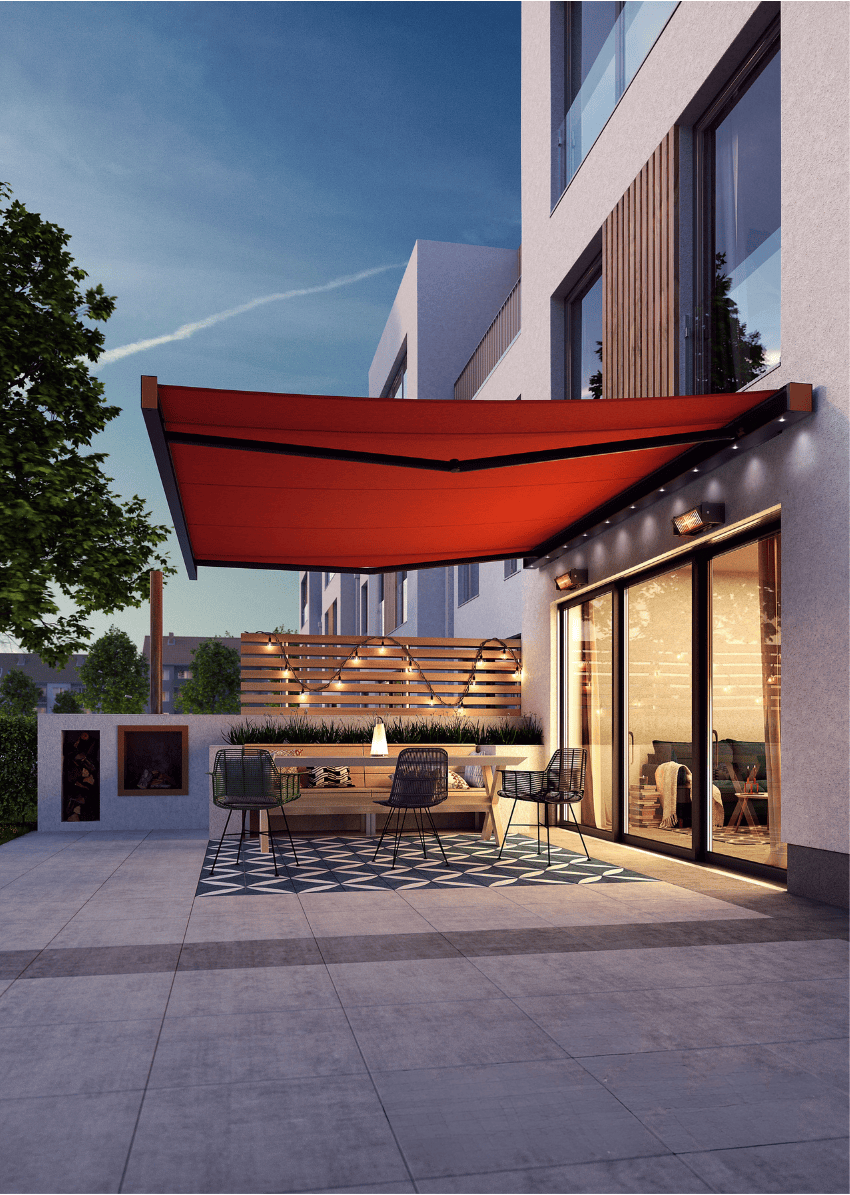
Sleek Lighting: How LED Channels are Engineered
Modern verandas often feature lighting that looks like it's part of the structure, rather than an afterthought. This is achieved through integrated LED channels, specialized aluminium housings built directly into the rafters or the gutter beam. This hardware doesn't just hold the light; it protects the electronics, manages heat, and ensures the light is diffused perfectly for a soft, ambient glow.
Heat Dissipation: The Role of Aluminium
LEDs generate heat, and if that heat isn't managed, the lifespan of the light is significantly reduced. Aluminium is an excellent thermal conductor, and the rafter itself acts as a 'heat sink,' drawing warmth away from the LED strip and dissipating it into the air. This is why integrated lights in aluminium frames outlast those stuck onto other materials.
Diffusers and Optics
A bare LED strip can look 'dotty' and harsh. Integrated channels use frosted or opal polycarbonate diffusers to blend the individual light points into a continuous bar of light. The shape of the channel also dictates the 'beam angle,' ensuring the light is directed downwards onto your patio rather than into your eyes.
- Opal Diffusers: Creates a soft
- uniform 'neon' effect.
- Frosted Diffusers: Balances light output with some visible sparkle.
- Clear Covers: Maximum light output
- usually used for indirect mood lighting.
- Gasketed Seals: Ensures the LED channel remains watertight.
Concealed Cabling and Drivers
The hallmark of a quality installation is the absence of visible wires. High-end veranda profiles include dedicated internal 'chases' or conduits where the low-voltage cables are hidden. The LED drivers (the 'transformers') are often tucked away inside the gutter beam or a wall-mounted box, out of sight and protected from the weather.
Check if the LED system is dimmable, as this requires specific compatible driver hardware.
Maintenance and Access
While LEDs last for thousands of hours, the hardware should allow for future maintenance. The best systems feature 'click-in' diffusers that can be removed if a section of the strip needs replacing, without having to dismantle the entire structural rafter.
Deciding between the two: common questions
Can I add LEDs to my veranda later?
It is much harder to do neatly. Integrated channels need to be specified at the factory stage so the rafters can be pre-milled and wired.
Are the LED channels waterproof?
Yes, the housings are typically IP65 or IP67 rated, meaning they are fully protected against rain and dust.
Do integrated LEDs use a lot of power?
No, they are incredibly efficient. A full veranda of LED lighting typically uses less power than a single traditional patio floodlight.
Can I change the colour of the lights?
Standard systems are warm white, but RGB (colour-changing) hardware is available as an option on many premium models.
In short
How integrated aluminium channels and polycarbonate diffusers create a seamless, durable lighting solution for modern verandas.
What to do next
Light up your evenings with integrated LEDs, ask for a demonstration of our lighting options.
Ready to Transform Your Outdoor Space?
Get a free, no-obligation quote. Email a photo of the area plus your preferred width, projection and operation type, and we'll do the rest.