
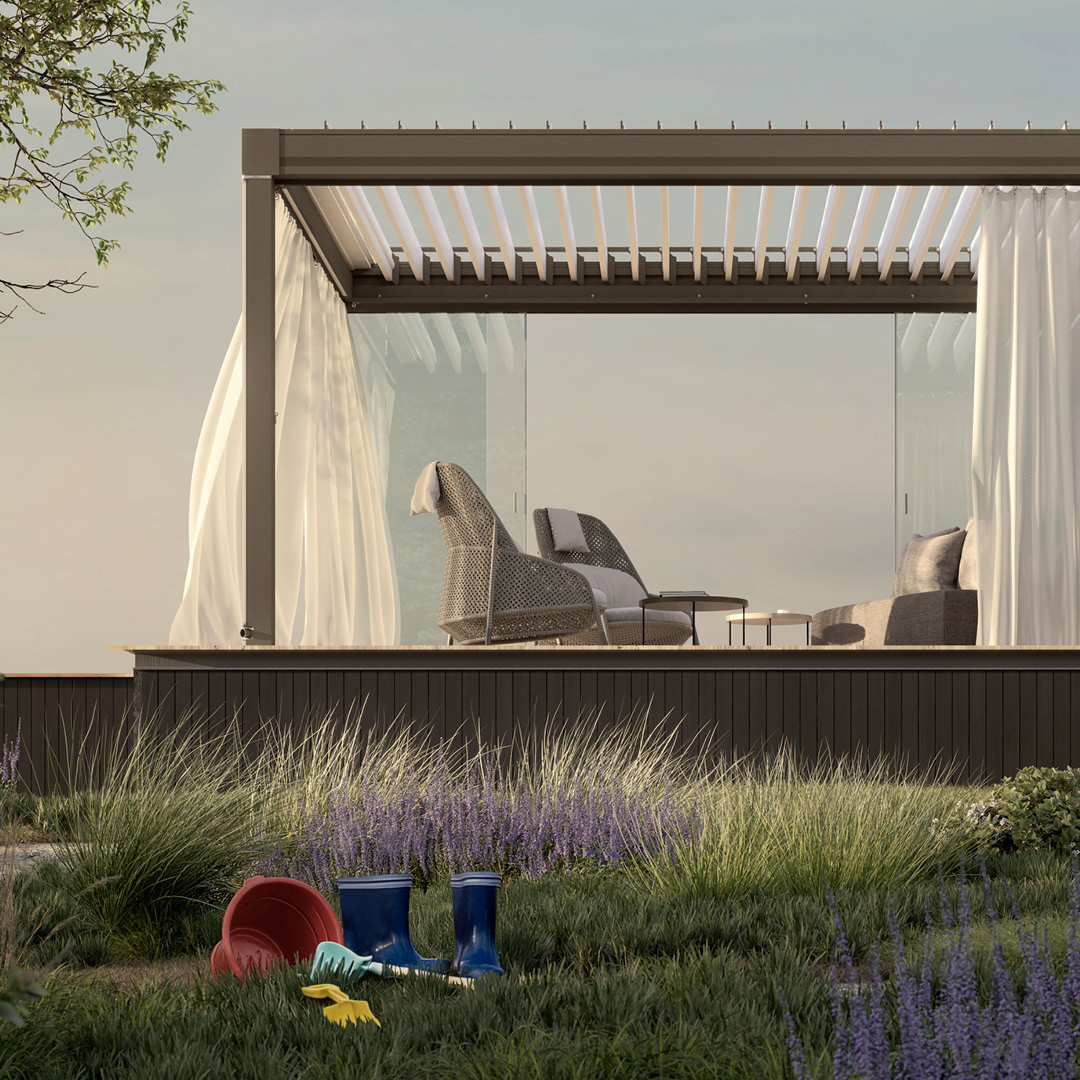
Glass room or extension: more house, or more garden you can use?
We are not builders, and this guide is easier to write because of it. A glass room and a single storey extension are frequently weighed against each other by people with a fixed budget and a tired patio, and the two are not competing for the same job at all. One makes the house bigger. The other makes the garden usable for most of the year. When a customer genuinely needs more heated rooms, we say so and lose the enquiry, which is a better outcome than a glass room bought for the wrong reason.
Not sure which one your house needs?
We will look at the elevation, the light and how you use the garden, and say honestly if a builder would serve you better. The survey costs nothing either way.
What you are actually buying
An extension is building work. Foundations, walls, a roof, insulation, electrics, plaster, and the house grows by however many square metres you paid for. A glass room is a thermally broken aluminium structure with a glass roof and sliding glass walls, standing on prepared bases, separated from the house by the doors you already have. One is more house. The other is a patio you can use in October.
Disruption, and how long you live with it
This is the part people underestimate. An extension means groundworks, deliveries, trades in and out, dust through the house and a kitchen or a back room out of use for a stretch. A glass room installation is a short, contained job on the patio once the bases are ready. Nobody has to move out, and the back of the house is normally usable throughout.
Cost: what moves each number
We publish no prices for our own work because the wall, the ground and the exposure change the figure, and we certainly cannot quote somebody else's building work. What is fair to say is the shape of the two costs. An extension carries the ground, the structure, the trades and the finishes, and the number grows with every discipline involved. A glass room carries the frame, the glazing and the bases, and is a single trade. The gap is usually large and it buys two different things.
- Extension
- groundworks, structure, roof, insulation, first and second fix, finishes
- Glass room
- base preparation, aluminium frame, roof glazing, sliding panels, optional lighting and heating
Paperwork and how each is treated
Extensions are assessed as building work, with permitted development limits and building regulations both in play, and drawings and inspections as part of the process. An unheated glass room with the existing back doors retained is usually treated as a substantial garden structure, where height, position and distance to the boundary matter most. Neither of those is a promise about your address, so check with your council before ordering anything.
Knock through and heat the space permanently and you have built an extension, whatever the product is called on the invoice.
Daylight, and the argument nobody expects
An extension puts a solid roof and solid walls where daylight used to arrive, so the original room behind it usually goes darker unless roof lights are designed in. A glass room puts glass where the light was, so the loss is far smaller. On a north facing rear elevation or a terraced house with one source of light into the kitchen, that difference is worth taking seriously before the builder's drawings are ordered.
Comfort through the year
An extension is a heated room and behaves like one in January. A glass room closed up with infrared heating is comfortable for an evening and a gathering, and is not the same thing. In summer the comparison flips: the extension is another indoor room, while the glass room slides open along most of its length and becomes a covered terrace. Be honest with yourself about which season you are buying for.
- Need another bedroom, office or dining room used daily in winter, extension
- Want the patio usable from March to November and open in summer, glass room
- Want daylight preserved into the existing room, glass room
- Want the value of added floor area in the house, extension
Which is right for you
If you need more heated floor space, build the extension and enjoy it. If your house is the right size and it is the garden that goes to waste for eight months a year, a glass room does something an extension cannot, which is give you the outdoors with the weather taken off it. Plenty of customers do the second precisely because they did not want to lose the garden to the first.
Questions people ask us about this
Does a glass room add value like an extension does?
They are different propositions. An extension adds measurable heated floor area. A glass room adds a desirable, well finished outdoor space, and how that is valued depends entirely on the buyer and the house.
Can a glass room be heated and used as a room all winter?
It can be closed and warmed with infrared heaters for evenings and gatherings, and it is still an outdoor room. If you want February comfort without heaters running, you want an extension.
Is a glass room quicker to get than an extension?
Considerably, because it is one made to measure structure and one trade rather than a sequence of them. Timescales are confirmed at survey once the wall and the bases are known.
Do I need building regulations approval for a glass room?
Usually it is treated differently from an extension because it is unheated and separated from the house by the existing doors, but this depends on the design and your address. Confirm with your local authority before ordering.
Will a glass room make my kitchen dark?
Far less than a solid roofed extension of the same footprint, because glass replaces glass. Roof glazing choice makes a further difference and is set at survey.
What guarantee comes with a glass room?
Our glass rooms are covered by a warranty of up to 10 years, confirmed in writing with your quotation.
In short
An extension buys heated floor space and building work. A glass room buys eight or nine months of usable garden with far less disruption and better daylight. Choose by which of those is actually short at your house.