
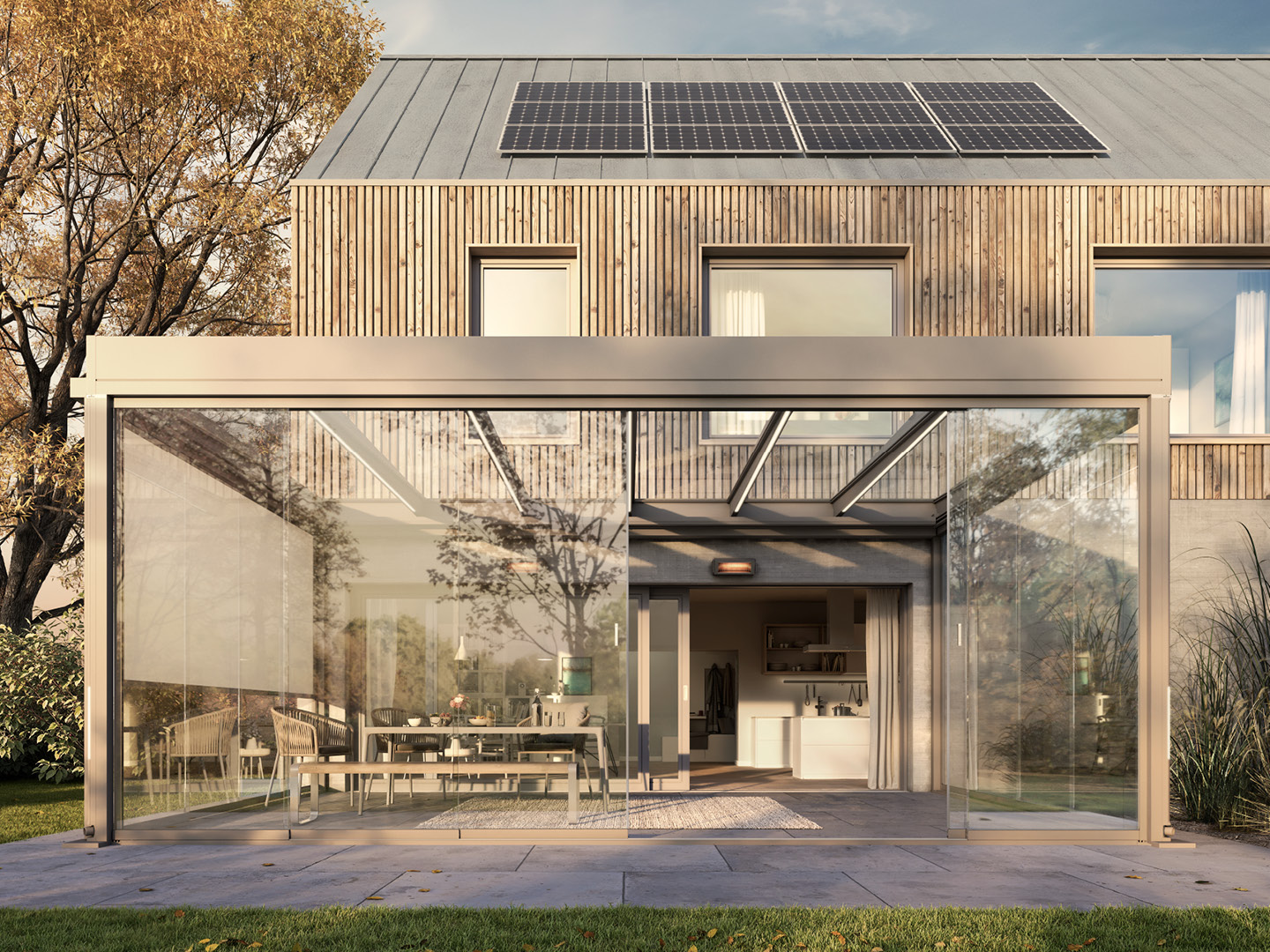
My glass room is unusable on hot days, what can be done?
Stopping heat before it enters beats removing it afterwards, every time.
A glass room that is glorious in April can be intolerable in July, and the reason is solar gain: sunlight passes through glass as short wave energy, warms everything inside, and the heat that radiates back cannot escape as easily as it arrived. There are three levers, glass, shade and airflow, and they are not equally effective in every situation.
Make the space usable all summer
Whether that means solar control glazing, an awning over the glass or a louvred roof with adjustable blades, we will talk through what suits your aspect and how you actually use the room.
Why it gets so hot so quickly
Glass is generous to incoming sunlight and mean about letting the resulting heat back out. The floor, furniture and walls absorb the energy and re-radiate it at a longer wavelength that the glazing largely blocks, so the temperature climbs through the day. The roof is the biggest contributor because it faces the sun at its highest and strongest, which is why shading a roof does more than shading a wall of glazing, even though the wall is what you notice.
The three levers, in order of effect
Reducing the heat that arrives is far more effective than removing it afterwards. External shading intercepts sunlight before it passes the glass, so the energy never enters the room. Solar control glass reflects and absorbs a proportion of it permanently. Ventilation deals with what got through. Internal blinds are the weakest of the options for heat, because by the time they are shading you the energy is already inside, though they still help with glare.
- External shading
- strongest effect, stops heat before the glass
- Solar control glass
- permanent, no operation and nothing to maintain
- Cross ventilation
- clears trapped heat, most useful in the evening
- Internal blinds
- helps glare more than heat, weakest for temperature
Glass specification, in plain terms
Solar control glass carries a coating that reflects part of the sun's energy while letting a good amount of daylight through, and it works constantly without anyone doing anything. Tinted glass reduces gain and glare but also cuts daylight noticeably, which some people dislike in a British winter. Self cleaning coatings can be combined with solar control on the same unit. Where a roof is being replaced anyway, upgrading the specification is far cheaper than doing it as a separate job later.
Solar control glass is judged on how much heat it rejects against how much daylight it lets through. Cheaper tinting achieves the first by sacrificing the second.
Questions people ask us about this
Why is my glass room hotter than the garden outside?
Sunlight passes through the glass and warms everything inside, but the heat that radiates back is largely trapped by the same glazing, so the temperature builds through the day.
Do internal blinds cool a glass room?
They help with glare and take the edge off, but the heat has already passed the glass by then. External shading is far more effective for temperature.
What is solar control glass?
Glass with a coating that reflects and absorbs part of the sun's energy while still letting daylight through, reducing heat gain permanently with nothing to operate.
Is a louvred roof cooler than a glass roof?
In summer, yes, because closed or tilted blades stop the sun reaching the space at all. A glass roof gives you more light and full rain cover, so the choice depends on how you use the space.
Can shading be added to a glass roof I already have?
Often yes, with an awning fitted above or below the glazing, subject to the structure. We would look at the existing frame before recommending anything.
Shading options that suit different structures
A louvred roof gives the most control, because the blades close for full shade, tilt to cut the sun while keeping the light, and open completely on a mild day. Where a glass roof already exists, an external awning fitted above or below it provides shade on demand and can be retracted the moment the sun goes. Side screens deal with low evening sun on a west facing terrace, which is the direction that catches most people out, because the sun is at its lowest and most direct exactly when you want to be sitting outside.
- Louvred roof for adjustable shade, light and rain cover in one structure
- External awning over or under a glass roof for shade on demand
- Side screens for low evening sun on west facing terraces
- Planting for the long game, a deciduous tree shades in summer and lets light through in winter
Getting the airflow right
Heat gathers at the top of a room, so an opening at high level and another at low level lets it leave under its own steam. Sliding doors thrown open at one end only tend to create a warm pocket rather than a through draught. Where a glass room adjoins the house, opening a door on the far side of the house creates the pressure difference that actually moves air. It costs nothing to try, and it makes a real difference on a still evening.
In short
Stop the heat at the outside of the glass. External shading and the right glass specification do the heavy lifting, ventilation clears the rest, and internal blinds are for glare rather than temperature.