
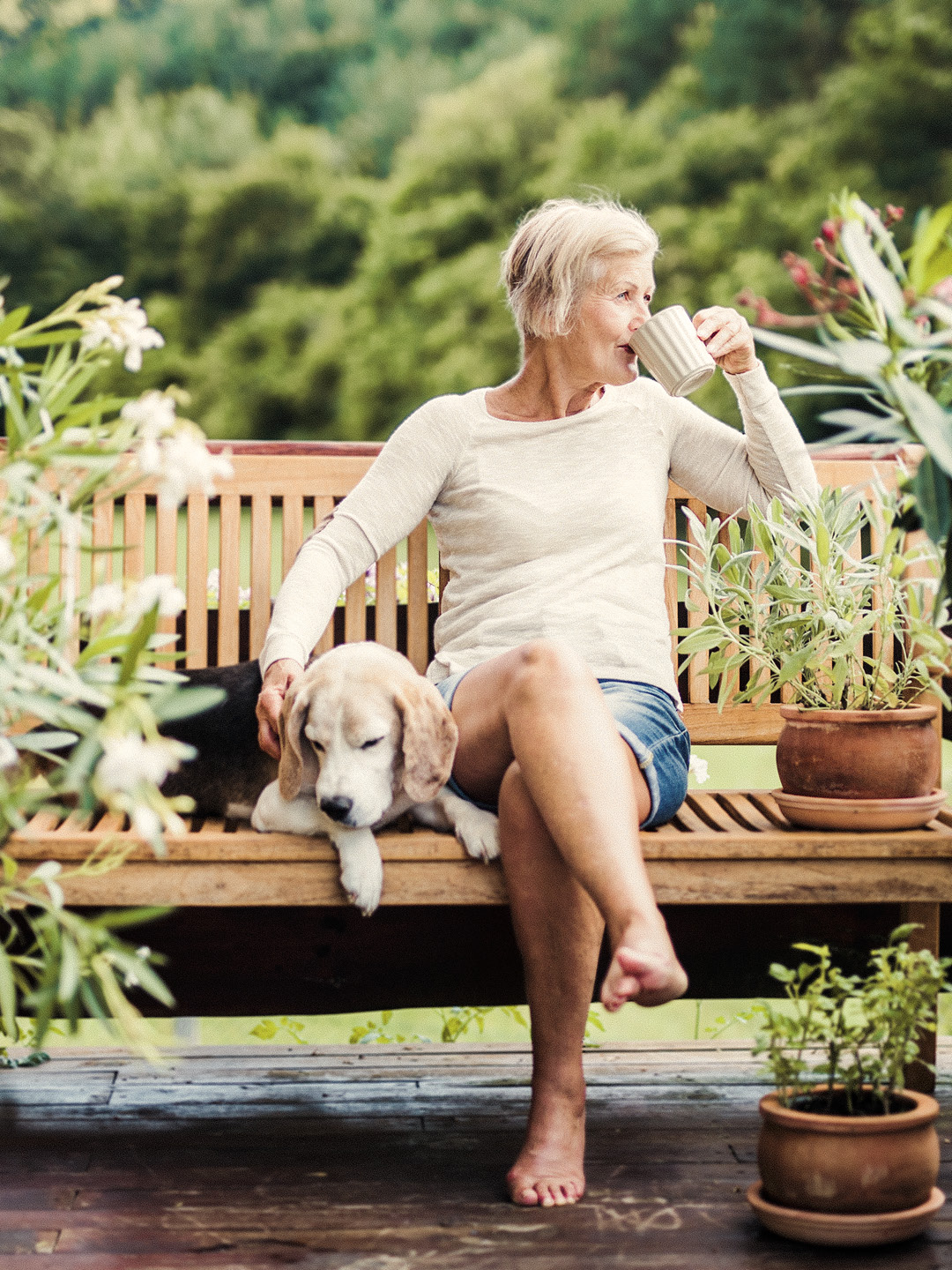
Creating Safe and Comfortable Shaded Seating
For elderly relatives, a comfortable garden space needs to offer more than just a place to sit. It needs to provide reliable shade from harsh UV light, protection from sudden changes in temperature, and a stable, draft-free environment. A well-designed veranda provides exactly this, creating a sanctuary where family members can enjoy the outdoors without the risks associated with prolonged sun exposure or unpredictable wind.
Consistent shade and climate
Unlike temporary shades, a permanent veranda offers consistent UV protection throughout the day. By adding vertical glass or zip screens, you can further enhance this comfort, creating a protected, climate-controlled zone that stays pleasant even when the breeze picks up.
Step-free access and seating layout
For many elderly relatives, getting to the seating area matters as much as the shade once they arrive. A step-free threshold from the house, a firm and level surface underfoot, and enough width for a walking frame or wheelchair to pass a fixed chair without squeezing past posts all reduce the daily risk of a trip or stumble. Position seating so it is reachable without crossing an exposed, wind-caught corner of the garden first.
- Confirm a step-free route from the nearest door
- Choose a firm, level, non-slip floor finish
- Leave clear width past fixed seating for a frame or wheelchair
- Avoid routing the path through an exposed, wind-caught corner
Safety and stability
We prioritise robust construction, ensuring a completely stable structure that will not move or rattle, providing a secure and reassuring space for your relatives to enjoy.
Common questions
Can I add screens for more protection?
Yes, vertical side screens are excellent for protecting against wind and sun glare, creating a much more comfortable environment, and they can be added at design stage or retrofitted later if you find a particular elevation is more exposed than expected.
Is a glass roof too bright?
You can choose from a range of glass options, including solar-control or frosted finishes, to ensure the light levels are soft and comfortable, which particularly helps relatives sensitive to glare or with certain eye conditions affected by harsh direct light.
How do I stop draughts around a seating area for someone who feels the cold easily?
Fitting side screens or glass panels on the windward elevation, combined with a solid roof rather than an open lattice, cuts most of the draught that would otherwise make an outdoor seating area feel colder than the actual air temperature suggests.
Can lighting help make the space safer in the evening?
Yes, even, glare-free lighting along the seating area and route to the door helps anyone with reduced vision judge steps, thresholds and furniture positions safely, and can be run on a simple switch or sensor near the seating itself.
Will the structure need much maintenance for an elderly relative to manage?
Aluminium framing and toughened glass need only occasional cleaning and do not require the repainting, resealing or rot treatment that timber structures do, which matters if your relative or a family member will be responsible for the upkeep.
Is a veranda or a fully enclosed glass room better for someone with limited mobility?
An open veranda suits fair-weather use and fresh air, while a glass room with doors gives a more consistent, weatherproof, temperature-controlled space that can be used comfortably even on colder or wetter days, so the choice depends on how often the space needs to be usable.
In short
Enhance your garden with a safe, shaded, and climate-controlled seating area specifically designed for the comfort and protection of elderly family members.
What to do next
Let's design a comfortable, safe space for your garden.
Ready to Transform Your Outdoor Space?
Get a free, no-obligation quote. Email a photo of the area plus your preferred width, projection and operation type, and we'll do the rest.