
Louvered Pergola Costs: Where the Money Goes
A louvered pergola is a mechanical structure, not just a frame. Its price reflects moving parts, drainage engineering and control gear, which is why it sits above a fixed-roof veranda of the same footprint.
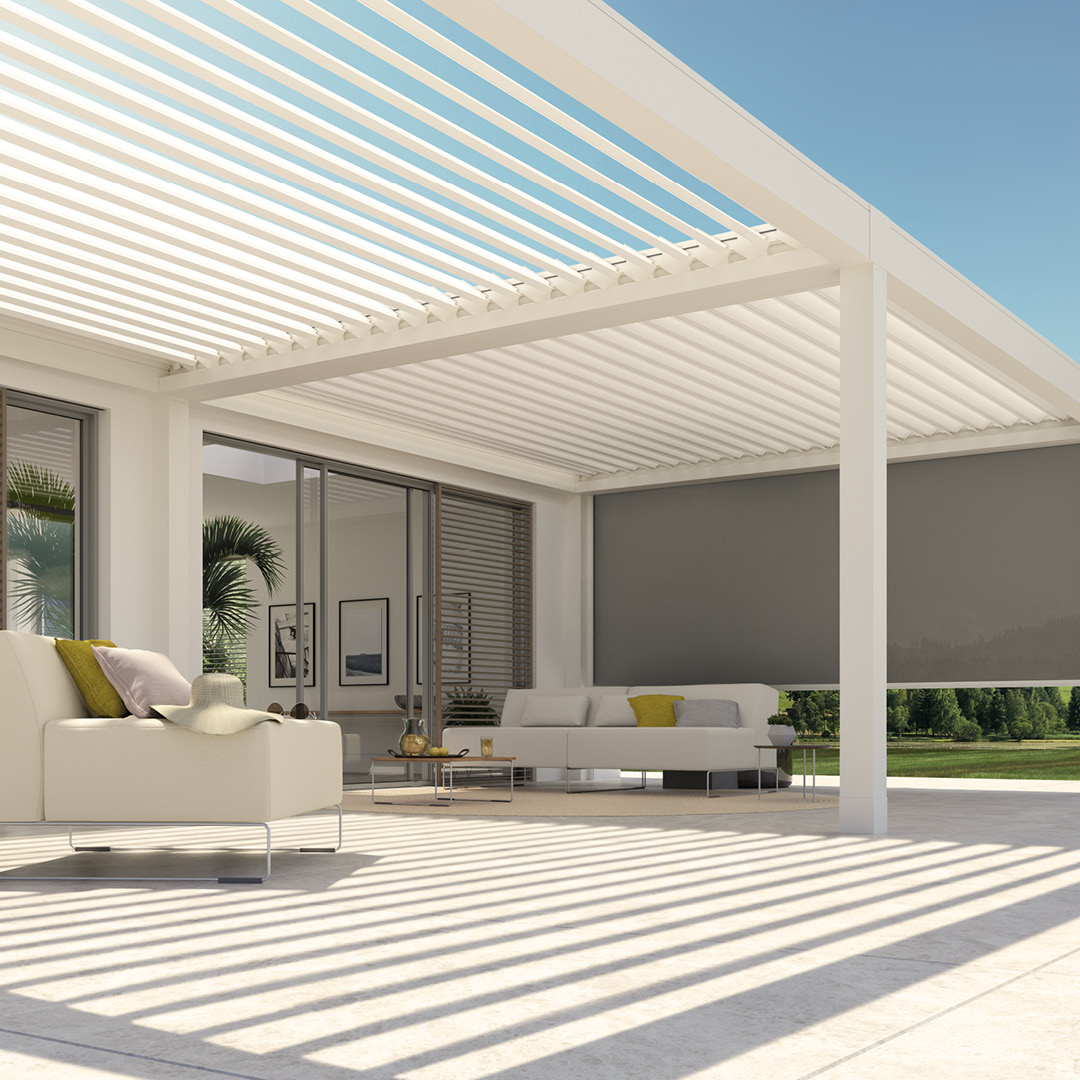
The louvre mechanism
Blades rotate on a linkage driven by one or more motors. Bigger roofs need additional drive units and heavier blade sections, so the mechanism scales faster than the footprint does.
Integrated drainage
When the blades close, water runs through the blades into the beams and down inside the posts. That concealed path is part of the structure and is a genuine engineering cost, not a finish.
Free-standing versus attached
Attaching to the house saves two posts but adds wall preparation. Free-standing units out in the garden need four bases and often a power run across the plot.
Screens, lighting and heat
Zip screens turn a pergola into a usable three-season room and are the most commonly added extra. Perimeter LED and infrared heaters follow. Specify the cable routes at survey even if you fit later.
Frequently asked questions
Are louvered roofs noisy in rain?
Aluminium blades do make more sound than a glass roof in heavy rain, most owners find it acceptable, but if quiet is a priority we would show you a glass option too.
What happens in snow?
Blades are opened or set to the manufacturer's recommended position so load and meltwater clear. Your handover pack covers this.
Can louvres be retro-fitted to an existing frame?
Rarely. The beams carry the drainage and the linkage, so the system is normally supplied as a whole.
Do they need servicing?
A yearly clean of the blades and a check of the drainage channels is all most installations need.
Next step
Ask for a louvered pergola quote with screen and lighting options priced separately.
Ready to Transform Your Outdoor Space?
Get a free, no-obligation quote. Email a photo of the area plus your preferred width, projection and operation type, and we'll do the rest.