
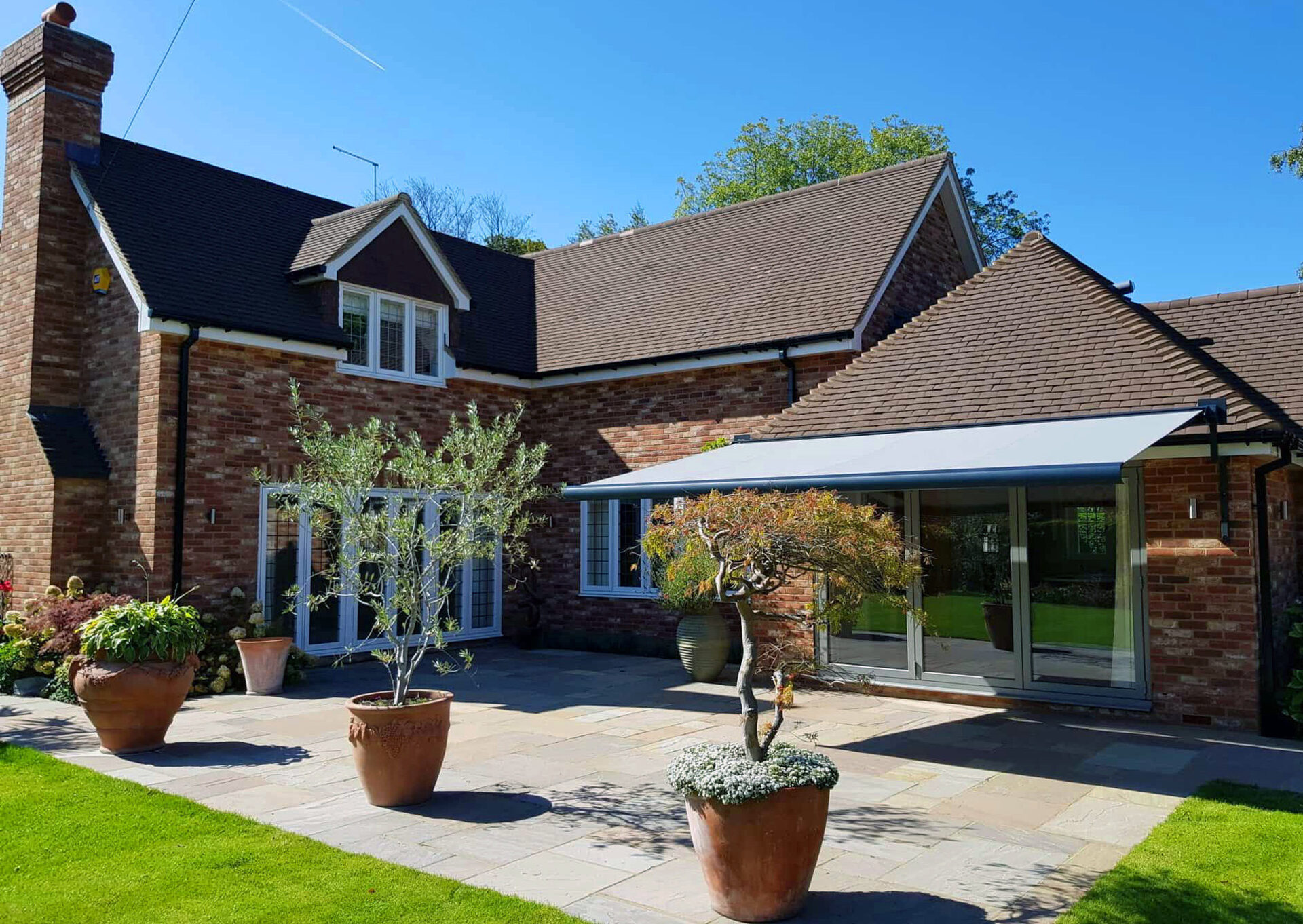
Veranda or Awning: Deciding for a Small Patio Space
When patio space is limited, every square metre counts. You are choosing between a structure that changes the architecture of your house and one that merely punctuates it. Our experience across Yorkshire shows that this decision isn't about which is better, but which fits your daily routine. Do you want a permanent outdoor room, or a space that reverts entirely to sunshine when you need it? We break down the practical trade-offs.
The Case for a Fixed Veranda
A veranda transforms a small patio into an extension of your indoor floor plan. Because it is a permanent, rigid structure, it provides consistent protection from rain and wind regardless of the season. If you are the type of person who wants to step out for coffee in November without checking a weather app first, the permanence of a veranda is a significant advantage. It effectively increases your usable square footage, making a small yard feel like an extra room.
- Creates a permanent, weather-proof outdoor space
- Provides consistent shelter in any season
- Requires little daily operation
- Can incorporate lighting or heating easily
Why a Retractable Awning Might Win
If your small patio needs to feel as open as possible when not in use, a retractable awning is hard to beat. Because it retracts completely into a slim wall-mounted cassette, it essentially vanishes, keeping your exterior looking clean and your patio flooded with natural light. This makes it ideal for smaller south-facing yards where winter light is precious. You get shade when the sun is intense, but zero obstruction when you prefer an open sky.
- Disappears completely when not needed
- Maintains natural light in your home interior
- Adds shade without adding bulk
- Perfect for seasonal flexibility
Spatial Impact and Installation
Consider the physical footprint. A veranda requires supporting posts which, on a very narrow patio, can create an obstacle or feel visually heavy. A retractable awning carries its own weight from the wall, meaning your entire floor area remains clear of support legs. We often advise clients with limited ground space to carefully evaluate their circulation path, if posts will interrupt your route from the back door to the garden, an awning is often the more pragmatic solution.
Always check the structural integrity of your exterior wall; a retractable awning exerts different leverage than a veranda post.
Deciding between the two: common questions
Do both options affect my home's natural light?
A fixed veranda can reduce light entering the house slightly, whereas an awning can be retracted completely to let maximum light in.
Is a veranda better for heavy rain?
Yes, a fixed veranda is designed to handle rain and snow effectively, whereas most awnings are primarily for sun protection and light, passing showers.
Can I fit a veranda to a small, enclosed patio?
Yes, but consider the placement of the support legs. We can often adjust the span to avoid blocking doors or pathways.
Which system is more low-maintenance?
Both require periodic cleaning, but a veranda's guttering needs clearing while an awning's fabric needs occasional inspection for debris before retraction.
In short
A veranda offers permanent living space, while an awning provides flexible light. Choose based on whether you want a year-round room or a seasonal shade solution.
What to do next
Want to see which option suits your specific patio layout?
Ready to Transform Your Outdoor Space?
Get a free, no-obligation quote. Email a photo of the area plus your preferred width, projection and operation type, and we'll do the rest.