
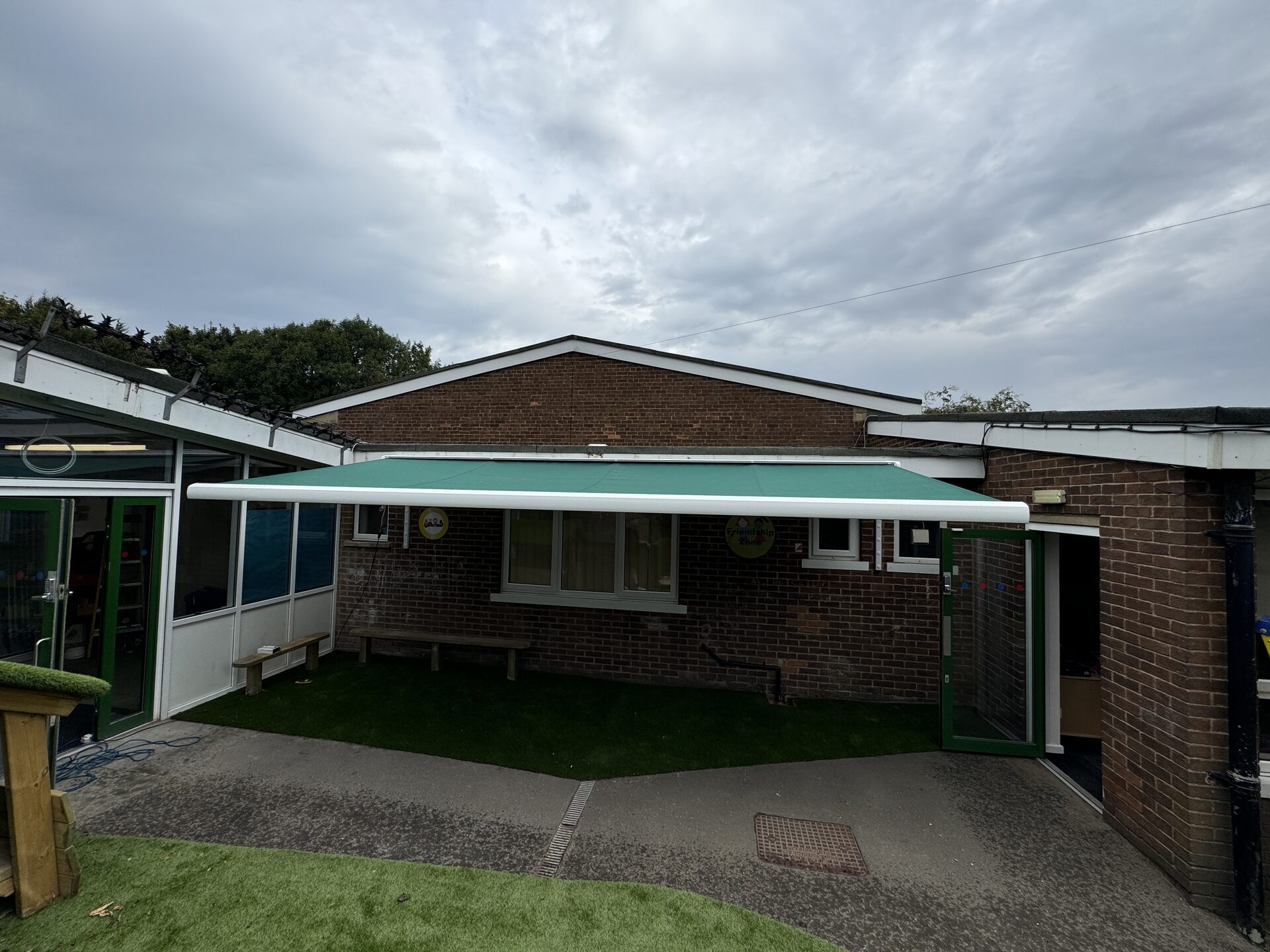
Permanent Fixed Canopy Structure or Tensioned Sail Shade for School Playgrounds
Schools need to shade outdoor areas where children spend time: playgrounds, assembly areas, outdoor classrooms. A fixed canopy structure is permanent and weatherproof; a sail shade (tensioned fabric on cables) is flexible and cheaper but less protective. This page compares them from an educational and operational perspective.
Fixed Canopy Structure: Permanent Shelter, Weatherproof, High Initial Cost
A fixed canopy is built from aluminium posts with a roof, typically polycarbonate or metal panels. It's bolted to concrete foundations and stays in place year-round. Once built, the area underneath is sheltered from rain and sun. Children and staff can use the space in light rain without getting wet, or on hot sunny days without sunburn. The structure is engineered for snow load, wind load, and the wear and tear of children's use. The cost is substantial: a canopy covering a 10 × 8 metre playground area represents a significant capital spend depending on roof material. But that investment is one-off: maintenance is periodic (cleaning, annual inspection of fixings) and the structure lasts many years. Planning permission might be needed depending on size and location. Once approved and built, the space is reliably protected.
Sail Shade: Flexible, Lower Cost, Weather-Dependent Cover
A sail shade is a tensioned fabric (usually PVC-coated polyester) suspended on cables and posts. The fabric is angled to cast shade, with UV blocking that varies depending on the sail material, ask the manufacturer for the specification of the fabric you're considering. The advantage is flexibility: sails can be positioned to shade different areas depending on the sun's angle. They cost noticeably less than a fixed canopy for a similar area. They're quicker to install and require less planning approval (usually no planning permission needed). The downside is that sails don't protect from rain: water passes through fabric or sits on the surface if the sail is slack. In summer sun, they work well. In winter, sails are less useful because low sun passes under them. In rain or wind, the shelter is limited.
Duty of Care and Weather-Protected Playtime
Schools have a duty of care: children shouldn't be sunburned, and rain shouldn't cut playtime short. A fixed canopy ensures that outdoor play can continue regardless of light rain or bright sun. A sail shade provides sun protection in summer but doesn't protect from rain. In autumn and spring, when rain is frequent but children still need outdoor time, a canopy is more protective. From a safeguarding and wellbeing perspective, a structure that keeps children dry and safe in changing weather is an asset to the school's duty of care. It also extends outdoor learning time through more of the year.
- Canopy: weatherproof, enables year-round covered play
- Sail shade: sun protection in summer, limited rain protection
- Canopy: more expensive, permanent, requires planning possibly
- Sail shade: cheaper, flexible, faster to install
Educational Use and Outdoor Classroom Potential
An outdoor classroom (a covered learning space where lessons happen outside) needs reliable weather protection. A canopy enables this: a teacher can conduct a lesson under cover regardless of conditions. A sail shade only works on dry, sunny days. For schools trying to expand outdoor learning, particularly important post-pandemic for wellbeing and developmental benefit, a canopy is the enabling infrastructure. A sail shade is good for summer supplementary lessons or outdoor sports sessions, but it can't be relied upon as the primary outdoor classroom space.
Maintenance and Durability Under School Use
A canopy structure is durable: the roof gets hosed down, bolts are checked, and it keeps working. If it needs repair, the repair is usually replacement of a panel or re-tightening of fixings, straightforward. Sail shades, being fabric, degrade. The fabric fades (loses some UV-blocking effectiveness), small tears can grow if not repaired, and the suspension system needs checking. Sails last 7-10 years before fabric replacement becomes necessary; a canopy lasts 20+. A school with budget for upkeep might prefer the flexibility of sails; a school wanting long-term stability prefers a canopy.
Decision Framework: Balance Cost Against Reliability
If the budget is tight and the need is summer sun protection, a sail shade delivers quick results. If the school wants to expand outdoor learning year-round and needs weather protection, a canopy is the infrastructure that makes that possible. Many schools install both: sails for flexible summer coverage of multiple small areas, and a permanent canopy over the key outdoor classroom or lunch shelter. This hybrid approach provides flexibility while ensuring key spaces are reliably protected.
Common questions
Do sail shades need planning permission, or can schools install them without approval?
It depends on size and location. Small sails over playground areas often don't need permission; large structures or those changing the school's visual appearance might. Check with the local planning authority first.
Can children play safely under a sail shade if it's windy?
Sails are designed to be safe in wind, but strong gusts can flap the fabric or create movement. Most modern sails are engineered for wind; check specifications for the maximum wind speed they're rated for.
How long does a fixed canopy take to install compared to sail shades?
A canopy: 2-4 weeks (including site prep and groundwork). Sail shades: 1-2 weeks. But the canopy, once done, is maintenance-free compared to the sail's ongoing fabric monitoring.
Can you expand a canopy if the school grows, or is it fixed in size?
A canopy can be extended in principle (adding sections), but it's disruptive and costly. Design the initial size to anticipate future needs.
Are sail shades suitable for outdoor classrooms, or just for playground shade?
Sail shades work for sunny-day outdoor lessons. For reliable year-round outdoor classroom use, a canopy with solid roof is better because it protects from rain and keeps the space usable in all weather.
In short
Fixed canopies provide permanent weather protection and enable year-round outdoor learning but cost more and need planning. Sail shades are cheaper and quicker but offer only summer sun protection.
Talk to us about your site
Working out how to shade your school's outdoor spaces for play and learning? We can help you compare fixed canopies and sail shades, and recommend the approach that meets your duty-of-care and educational goals.
Ready to Transform Your Outdoor Space?
Get a free, no-obligation quote. Email a photo of the area plus your preferred width, projection and operation type, and we'll do the rest.