
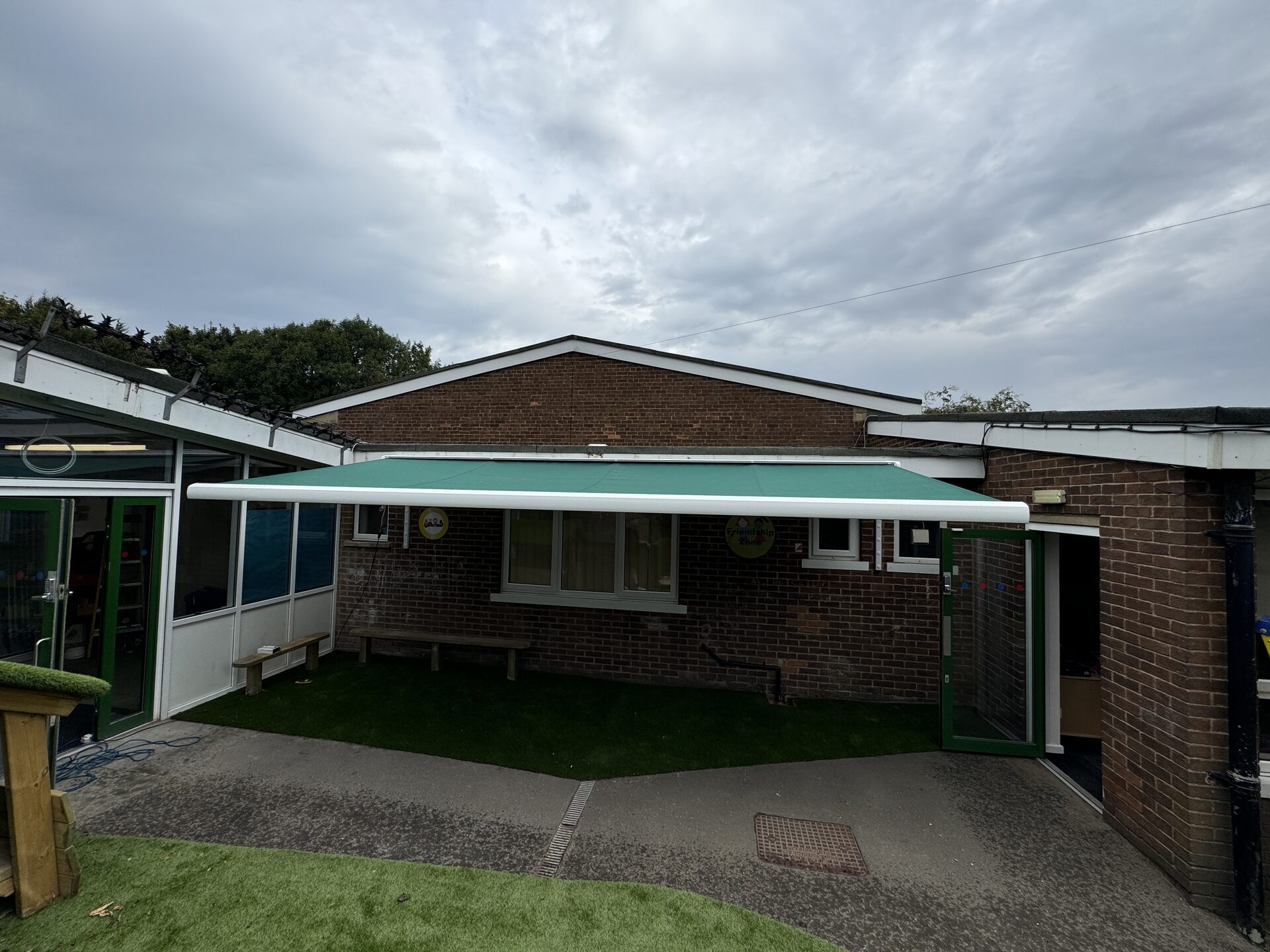
Canopy Design for Primary School Playgrounds
Primary school environments demand structures that balance daily operational needs with long-term safeguarding requirements. When planning a covered area, the primary objective is creating a versatile space that extends classroom learning or outdoor play through all seasons, while ensuring the installation itself remains robust and inherently safe for pupils throughout the school day.
Integrating shelters into the school day
Pupil movement is the primary consideration. Whether managing wet-play lunch transitions or providing a sheltered space for quiet reading, the canopy must support the school's daily rhythm. Careful placement ensures flow is maintained without bottlenecking, while the design must account for the high-energy nature of primary age users by ensuring all structural corners are rounded and fixings are inaccessible.
Operational realities and site constraints
Unlike commercial settings, schools often have limited site access during term times and strict protocols regarding visitors. Installation schedules must be carefully managed to align with school holidays. From a layout perspective, the canopy should be positioned to avoid creating dark corners near classroom windows, maintaining as much natural light as possible inside the building.
- Review pupil movement patterns during wet weather
- Establish clear boundaries for the construction team
- Verify existing site drainage capacity
- Confirm out-of-hours installation windows
Technical safety and durable finishes
Safety is non-negotiable. Aluminium frames are favoured for their inherent rigidity and low maintenance requirements. Powder-coated finishes provide a hard-wearing surface that resists daily impact. Roof glazing choices, typically polycarbonate for its durability in high-traffic areas or toughened glass for clarity, must be specified based on the specific light and impact requirements of the location.
Managing rainwater and ground maintenance
Water management is critical to prevent muddy patches and slip hazards. Integral guttering systems should route water away from play zones and pathways into existing drainage systems, not onto the ground surface. Regular maintenance is simplified by choosing systems with concealed fixings that don't trap debris.
Common questions
How do you ensure the canopy is safe for active playground use?
We specify rounded profiles, concealed fixings, and high-impact glazing materials to remove potential hazards.
Can we install these structures during term time?
Most schools prefer scheduling work during holidays to avoid disruption, though we can arrange site segregation for quiet, non-invasive phases.
What is the most durable roof material for a school?
Polycarbonate is often preferred for its resistance to impact, though we match the material to the school's specific durability requirements.
Does the drainage need connection to the school mains?
It is ideal, but we assess each site to see if run-off can be safely managed into suitable garden areas or soakaways.
In short
Technical guidance on primary school canopy specification, focusing on safe design, operational flow, and long-term durability in active environments.
Talk to us about your site
Contact our technical team to discuss your school site constraints.
Ready to Transform Your Outdoor Space?
Get a free, no-obligation quote. Email a photo of the area plus your preferred width, projection and operation type, and we'll do the rest.