
Fabric Pergola Roof You Can Open or a Sealed Glass Extension Structure
A retractable pergola with a motorised fabric roof gives you shelter when you need it and open sky when you don't. A glass extension is a sealed room with proper insulation and a controllable indoor climate. Both let you use an outdoor-facing space for more of the year, but the physical build, the planning route and the feeling of being in each are very different. This page compares living in each, structure by structure.
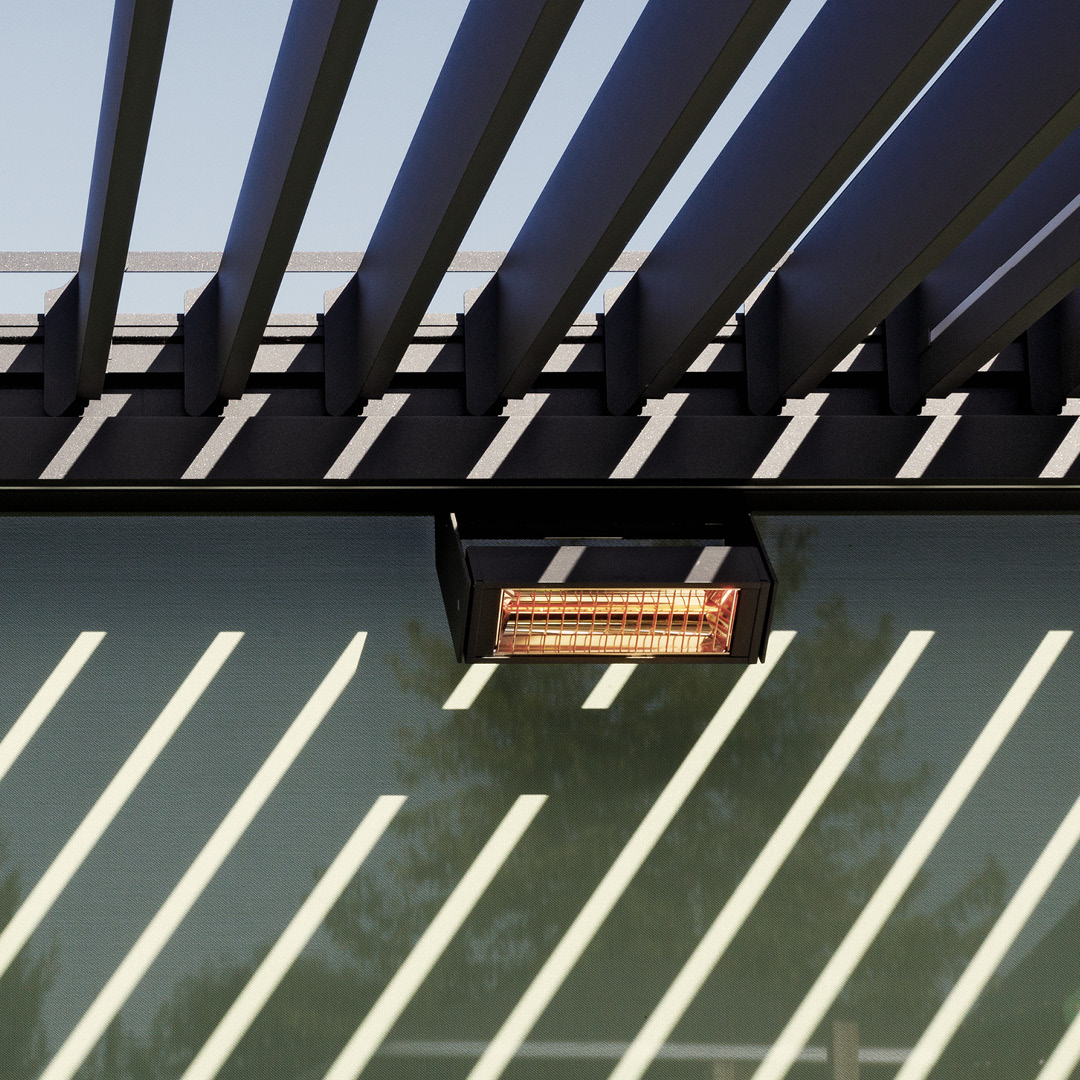
Retractable Pergola: Garden Connection, Weather-Dependent Comfort
A retractable pergola is an aluminium frame carrying a motorised fabric roof that slides open or closed along tracks. Extend the roof on a cold or wet day and you gain shelter and a modest temperature lift from the fabric. Retract it on a clear day and you're sitting under open sky, fully connected to the garden. The appeal is experiential: you're outside, in the weather, with control over how much of it reaches you. In summer you get breeze and birdsong; in winter, extended, you're sheltered but still aware of the season. The limitation is thermal: even fully extended, a fabric roof provides minimal insulation, so on a cold day you're still cold unless you add a heater or wear layers. Opening and closing the roof also takes a short spell rather than being instant.
Glass Extension: Sealed Room, Climate Control, Separation From Outside
A glass extension is a genuine room: an aluminium or hybrid frame with insulated glass panels, sealed to keep conditioned air in, usually with opening doors or windows for ventilation. Internal temperature can be actively managed, warmed in winter and ventilated or cooled in summer. The space feels indoor and formal rather than outdoor and casual. You're protected from rain, wind and temperature extremes throughout. Because it's a permanent structure tied into the house, it is treated as a building project rather than a garden accessory, which affects the planning and building control route. You can furnish it as you would any room, and it is intended to be usable across the full year rather than for extended fair-weather spells.
Structural Fixing and What Each Sits On
A retractable pergola is typically a freestanding or wall-mounted frame on its own footings or fixed to an existing wall, with the fabric mechanism carried in the frame itself. It does not usually alter the house structure and can often be removed or relocated with modest work. A glass extension is built as an extension of the house: it needs its own foundations sized to the ground conditions, a damp-proof course tied into the existing wall, and structural fixings that a competent installer or engineer should specify for the property. Where a glass extension replaces an existing wall opening or removes a section of external wall, a structural engineer typically confirms the lintel or beam needed to carry the load above. These are the kinds of details a site survey settles rather than a general comparison.
- Pergola: shallow footings or wall brackets, minimal alteration to the house
- Glass extension: foundations, damp-proof course, structural tie-ins
- Pergola: can often be repositioned later if the garden layout changes
- Glass extension: fixed footprint once built, harder to relocate
Disruption During the Works
Fitting a retractable pergola is usually a short, contained job: footings or wall fixings, the frame assembly, then the motorised fabric roof, with limited mess and little interruption to using the rest of the garden. A glass extension is a longer build involving groundworks, a base slab, frame erection, glazing and often electrical first-fix, which means more vehicle access, more noise over a longer period, and a section of the garden or patio being a working site for several weeks. If you need the space back quickly for a specific season, that timeline difference is often the deciding factor rather than anything about the finished result.
Psychological Experience: Connection vs Enclosure
A retractable pergola extended feels like being under a canopy: sheltered but aware you're outside, the fabric above you, the garden around you. A glass extension feels like being indoors looking out: separated, contained, a distinct room. If you love gardens and want to be surrounded by plants and weather within reason, a retractable pergola suits that instinct. If you want an extra room that happens to have a garden view, a glass extension suits you better. This isn't about one being objectively superior; it's about how you actually want to feel when using that space. Some households choose both, keeping a retractable pergola further into the garden for open-air days and a glass extension off the house for dependable comfort.
Heating, Ventilation and Year-Round Usability
A retractable pergola, extended, is unheated on its own. A patio heater or infrared unit can be added, but that is a running-cost add-on rather than a built-in feature, and in genuinely cold weather the space still favours short visits over long stays. A glass extension can be fitted with underfloor heating, radiators or another heat source as part of the build, and ventilated or cooled for summer, which is what makes it usable on a wet January afternoon in a way a pergola generally is not. The trade-off is that the pergola stays closer to outdoor conditions by design, while the glass extension is built specifically to remove you from them.
Building Regulations and Planning Considerations
As a general principle, a freestanding or wall-mounted pergola with an open or retractable roof is more likely to sit outside full planning permission and may fall outside building regulations too, depending on its size, height and proximity to boundaries. A glass extension, because it forms a new enclosed room attached to the house, more often needs both planning permission, particularly where it changes the appearance of the property, and building regulations sign-off covering insulation, glazing safety, electrics and structural work. Every property and site is different, so these are general patterns only, and your local planning authority must confirm what applies to your specific project before work begins.
Maintenance Over Time
A retractable fabric roof needs the fabric kept clean, the motor and tracks checked periodically, and the fabric itself will eventually need replacing as it weathers, though the frame beneath tends to last much longer. A glass extension has fewer moving parts to wear but needs glazing kept clean for light transmission, seals and gutters checked to prevent water ingress, and, if heated, the heating system serviced like any indoor system. Neither is maintenance-free, but the nature of the upkeep differs: mechanical and fabric-based for the pergola, building-fabric based for the glass extension.
Choose a Retractable Pergola If, Choose a Glass Extension If
Weighing the two options side by side usually comes down to how you want to use the space and how much disruption you're prepared to accept to get there.
- You want to stay visually and physically close to the garden
- You want a room that reads as part of the house
- You're happy with a shorter
- lighter installation, You're prepared for a longer build with groundworks
- You want the option to open the roof fully on good days
- You want consistent conditions regardless of weather
- You want a structure likely to sit outside full planning control
- You accept a planning and building regulations process
- You use the space mainly spring to autumn
- You want the space usable in every season
Common questions
Can a retractable pergola be insulated to keep heat in, like a glass extension?
Not really. Fabric does not insulate the way glass and an insulated frame do. Some manufacturers offer more rigid, panel-based retractable roofs that trap more warmth, but they cost more and reduce the open-sky appeal that draws people to a fabric pergola in the first place.
How long does it take to open and close a motorised pergola roof?
It varies by size and motor, but it is generally a short operation measured in minutes rather than seconds. That is fast enough to respond to changing weather during an afternoon, though it is not instant like drawing a curtain.
Is a glass extension always warmer than a retractable pergola with a heater added?
In most cases, yes, because a sealed, insulated enclosure retains heat far better than an open-sided or fabric-topped structure. A patio heater under a pergola warms the immediate area but that heat disperses quickly into the surrounding air rather than being contained.
Can a glass extension be built with a retractable roof section instead of a fixed one?
Some structures combine a glazed room with an opening roof section, giving some of the flexibility of a pergola within an otherwise enclosed room. This adds mechanical complexity and cost, and needs careful detailing to keep the seal effective when closed, so it suits specific briefs rather than every project.
Does needing planning permission make a glass extension a much bigger undertaking than a pergola?
The planning and building regulations process adds time and administrative cost that a simpler pergola installation may avoid, but it exists because the extension changes the building itself. Your local planning authority can confirm what your specific project needs before you commit to a route.
Will a retractable pergola cope with strong wind or heavy snow the way a glass extension roof does?
A retractable fabric roof is generally designed to be retracted in high wind or heavy snow to protect the mechanism and fabric, whereas a glass extension's fixed roof is engineered to carry those loads while closed. This is a genuine functional difference to discuss with an installer for an exposed site.
In short
Retractable pergolas keep you close to the garden with a shorter build and lighter planning footprint, but offer limited winter warmth. Glass extensions are true rooms with managed climate and year-round comfort, but involve a longer build and generally need planning and building regulations approval.
What to do next
Trying to decide between a retractable pergola that keeps you connected to the garden and a glass extension that gives you a proper all-weather room? Talk us through how you want to use the space, and we'll help you think through the right structure.
Ready to Transform Your Outdoor Space?
Get a free, no-obligation quote. Email a photo of the area plus your preferred width, projection and operation type, and we'll do the rest.