
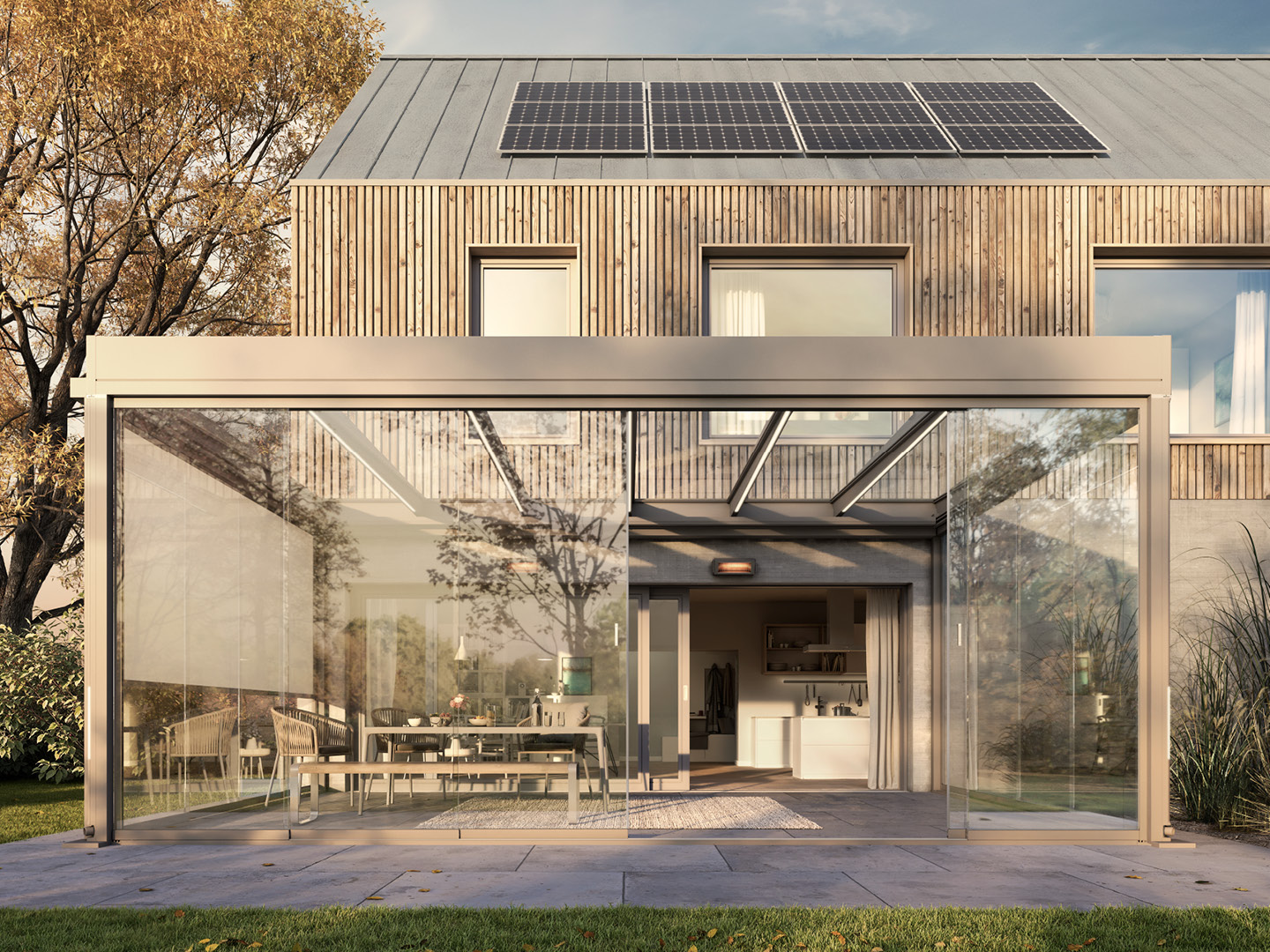
Moveable Blinds Underneath Glass or Glazing With Built-In Solar Control
When you build a glass roof, summer heat can be intense. You can install blinds underneath the glass to block and reflect heat, or you can specify solar-control tinted glass that reduces heat transmission through the glass itself. Both work, but they feel and behave very differently. This page compares them honestly.
Blinds Under Glass: Active Control, Openness When Wanted
Blinds are fabric or louvre systems installed between the glass panes or directly under the glass roof. When closed, they block direct sunlight and reflect heat back out through the glass. When open, you have an unobstructed view through the glass and full light. The system is active: you open the blinds on a cool morning (light and warmth is wanted), close them on a hot afternoon (heat is not wanted). The flexibility is valuable: the same structure works for all seasons. The cost sits in the middle of the range for a glass room roof, depending on size and blind type (louvres are pricier than roller blinds). The downside is that you have to manage them, if you forget to close them, the space heats up. Also, moving parts mean motors or mechanical systems that can fail.
Solar-Control Tinted Glass: Passive Heat Rejection, Always Working
Solar-control glass is tinted (typically bronze, grey or blue) and engineered to absorb and reflect infrared radiation (heat) while transmitting visible light. The glass itself does the work, no moving parts, no management. On a hot day, the glass noticeably reduces heat transmission compared with clear glass; ask your supplier for the specific performance figures for the product you're considering. The downside is colour: the glass has a persistent tint, so the view out is coloured and slightly darker (though still plenty of light). The tint is permanent, you can't remove it on a cool day to let more warmth in. Cost is higher upfront than clear glass, since the specialist coating adds to the price of the glass itself. But there are no mechanical systems to maintain or fail.
Real-World Heat Control: How Each Performs Through the Year
In spring (March-May) with weak sun and cool air, clear glass with open blinds is pleasant, you get warmth from the sun. Solar-control glass blocks some of that warmth, so the space is cooler. In high summer (July-August) with intense sun, blinds fully closed and solar-control glass both reduce heat well; the experience is similar. In early autumn (September), a cool sunny day with open blinds feels warmer than solar-control glass. In winter, you want every degree of warmth; clear glass with open blinds wins, solar-control glass blocks some solar gain you'd appreciate. The reality is that blinds adapt to the season better; solar-control glass is always filtering, even when you don't want it to.
- Blinds: open in spring and autumn for solar gain, closed in summer
- Solar glass: always filtering, never fully open to solar warmth
- Blinds: active management, high control but requires engagement
- Solar glass: passive, always working, no management needed
Light Quality and Aesthetics
Clear glass with blinds: when blinds are open, light is natural and white; when closed, the space is shaded but light quality depends on blind colour (white roller blinds are bright even closed; dark louvres are gloomier). Solar-control glass: light is always subtly tinted, the world outside looks slightly warmer (if bronze-tinted) or cooler (if blue-tinted). Some people find the tint relaxing and warm; others find it depressing or claustrophobic. This is subjective. A glass room you'll sit in for hours should feel light and open to you; if tinted glass makes the space feel dark, that's a real problem over time.
Maintenance, Reliability and Long-Term Performance
Blinds need cleaning (dust collects on louvres; fabric blinds fade slightly over years). Motorised blinds add another system that can fail, motors get stuck, switches corrode, wiring can short. A failed blind system means you're stuck with full sun or no sun depending on how it jammed, and replacing blind motors is a real added cost when it happens. Solar-control glass has no moving parts and doesn't degrade appreciably over 20+ years. It's effectively maintenance-free. This is a genuine reliability advantage.
Deciding Between Active Control and Passive Filtering
Choose blinds if: you want the flexibility to let sun in on cool days and block it on hot days, you like bright uncoloured light, and you don't mind managing the blinds. Choose solar-control glass if: you prefer a low-maintenance solution, you spend significant time in the space and want predictable cool temperatures, or you're in a very sunny location where heat is persistently a problem. Many glass rooms use both: clear glass with blinds, accepting the slight cost of blinds for seasonal flexibility. This is usually the best compromise.
Common questions
How much heat reduction does solar-control glass actually provide?
The reduction in solar heat gain compared to clear glass varies by tint and specification. Ask your supplier for the specific performance figures in the product datasheet before choosing between options.
Can solar-control glass be retrofitted to an existing glass roof?
Only if you replace the whole glass panels. You can't tint existing clear glass. If it's a retrofit, you'd need to remove and replace panels, which is costly and disruptive.
Are motorised blinds under glass reliable, or do they fail often?
They're reliable if properly installed and maintained, but failures do happen, usually motor jamming or switch corrosion. Budget for occasional service or replacement.
Does solar-control glass look noticeably tinted, or is it subtle?
It's noticeable if you're inside looking out or outside looking in. The sky looks slightly warmer or cooler depending on the tint. Some people like this; others find it oppressive. View samples before committing.
Can you combine solar-control glass with blinds for extra control?
Yes. Tinted glass does the baseline heat filtering, and blinds provide extra control and flexibility. It costs more but gives you the best of both approaches.
In short
Blinds offer seasonal flexibility and bright light but require active management. Solar-control glass passively reduces heat year-round but has a persistent tint and can't be adjusted for seasons.
What to do next
Designing a glass room and trying to work out the best heat management approach? We can help you weigh up the flexibility and light quality of blinds against the maintenance-free control of solar-tinted glass.
Ready to Transform Your Outdoor Space?
Get a free, no-obligation quote. Email a photo of the area plus your preferred width, projection and operation type, and we'll do the rest.