
How Snow Drifts Behave on a Wall-Mounted Roof
A wall-mounted veranda roof doesn't collect snow evenly the way a freestanding structure in open ground might; wind moving across the house roof above tends to deposit extra snow right where the veranda meets the wall, building a drift that behaves quite differently to a uniform blanket of snowfall.
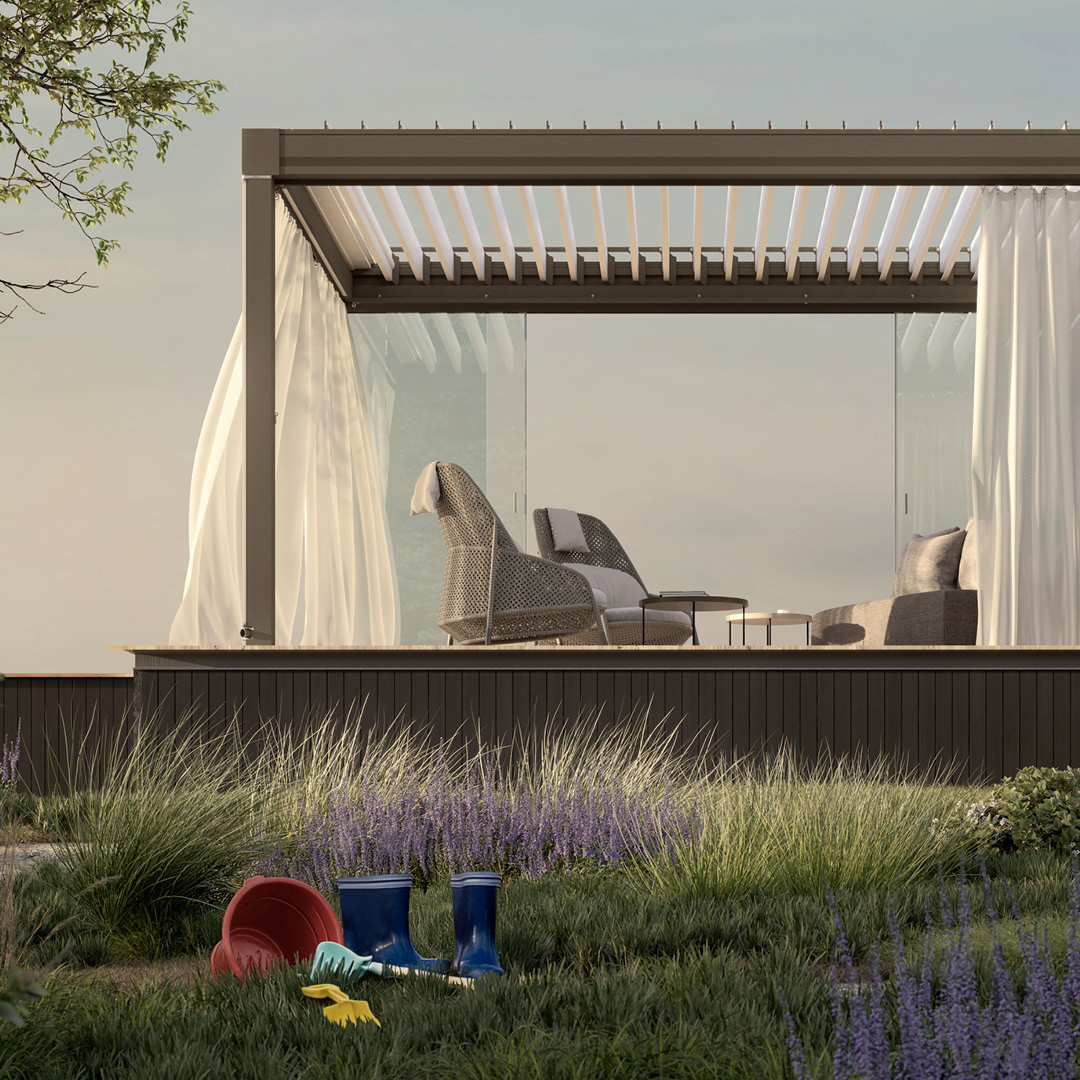
Safety first: isolate power before touching a motorised system, and never work at height off a ladder alone. If in doubt, book a fitter rather than forcing a mechanism.
Why the wall junction collects more snow than the roof edge
As wind carries falling or already-settled snow across the house roof above, it loses speed as it drops down onto the veranda roof below, dropping much of its load right at that transition. This produces a wedge-shaped drift that's noticeably deeper near the wall than at the outer edge of the veranda, unlike an open freestanding roof where snow settles more evenly across the whole surface.
What this means for structural load assumptions
A veranda roof rated for a given average snow load per square metre can still see a locally concentrated load at the wall junction that exceeds that average, even though the overall snowfall for the area is unremarkable. This is one reason structural specification for a wall-mounted roof considers drift potential specifically, not just total regional snowfall figures.
Drainage complications once the drift melts
A deep drift against the wall melts more slowly than the thinner snow further out on the roof, partly because it sits in the shade of the house for longer through the day. The resulting meltwater can arrive at the gutter and downpipe over an extended period rather than all at once, which generally isn't a capacity problem but can prolong how long the roof surface stays wet.
- Drift zones melt more slowly due to shading
- Meltwater arrives at outlets over a longer window
- Refreezing overnight can form ice at the drift's base
- Check outlets nearest the wall junction first
Clearing snow safely from a wall-mounted roof
Clearing heavy drift accumulation from a glass or polycarbonate roof is best done with a soft-bristled roof rake from ground level rather than climbing onto the structure, working from the outer edge inward so you're not standing beneath an overhang while clearing the deepest section near the wall.
Questions we get asked on repair calls
Is a wall-mounted veranda roof at more risk in snow than a freestanding one?
Not inherently more at risk, but the pattern of loading is different, with drift concentration at the wall junction rather than an even blanket, which is factored into structural specification.
How do I know if a drift is too heavy for my roof?
Visible bowing, unusual creaking or a drift that looks disproportionately deep compared with the general snowfall are all reasons to have it checked rather than assessed by eye alone.
Can I clear snow from a glass veranda roof myself?
A soft-bristled roof rake used from ground level is the safer approach; climbing onto glass or polycarbonate roofing isn't recommended.
Does ice forming at the base of a drift cause problems?
It can add extra localised weight and, if it blocks a gutter outlet, cause meltwater to back up rather than drain freely, so it's worth checking outlets near the wall after a thaw begins.
Should I ask about this at survey if my house roof is unusually steep?
Yes, a steep or large house roof above a proposed veranda is exactly the scenario where drift potential is worth discussing before the frame and pitch are finalised.
When a design detail can reduce drifting in the first place
Where a property is known to see significant drifting each winter, discussing roof pitch and the detail at the wall junction with your installer at design stage can reduce how sharply snow concentrates at that point, though it won't eliminate drifting caused by the house roof shape above.
In short
Wall-mounted veranda roofs collect concentrated snow drifts at the wall junction rather than an even blanket, affecting both structural load and how meltwater reaches the gutter.
Get it looked at
Mention any history of drifting snow on your wall when we survey your roof design.
Ready to Transform Your Outdoor Space?
Get a free, no-obligation quote. Email a photo of the area plus your preferred width, projection and operation type, and we'll do the rest.